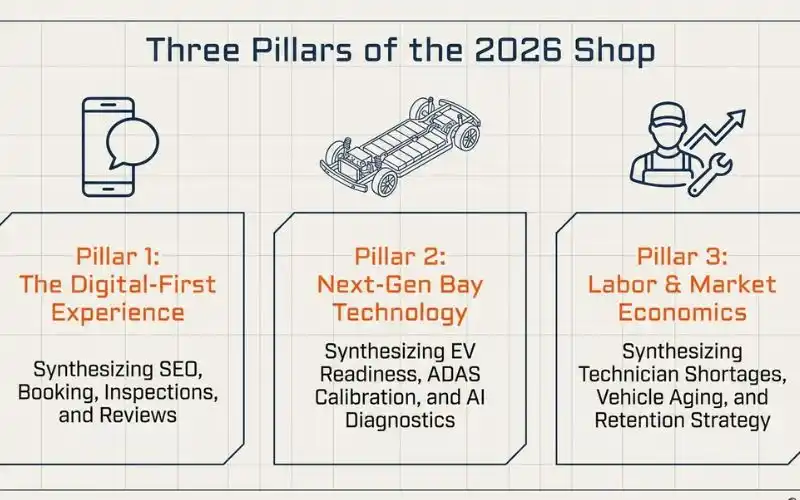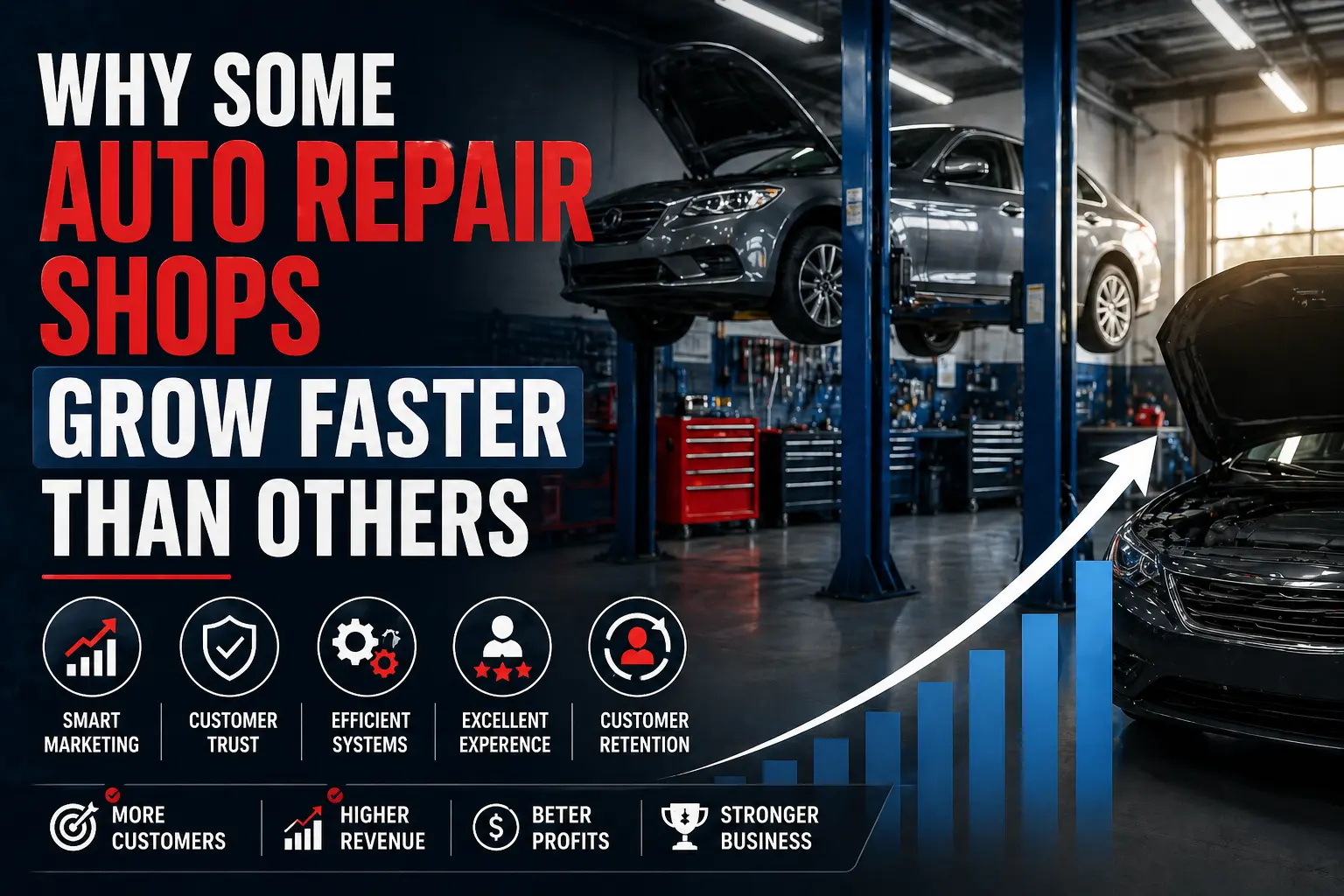
The auto repair industry is moving fast in 2026. New technology, new driver habits, and rising competition are reshaping how shops win business. If you own a shop in Houston or anywhere in Texas, this is the year to adapt.
This guide breaks down the ten biggest trends shaping auto repair shops right now. Understanding these shifts helps you plan smarter for the rest of the year.
1. Digital First Customer Experience
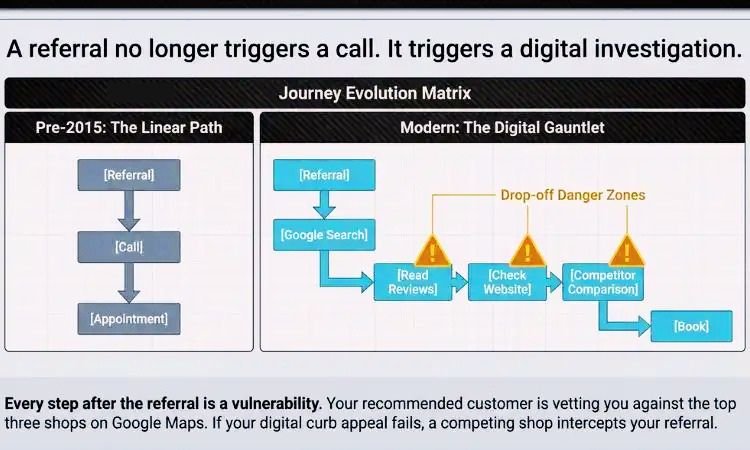
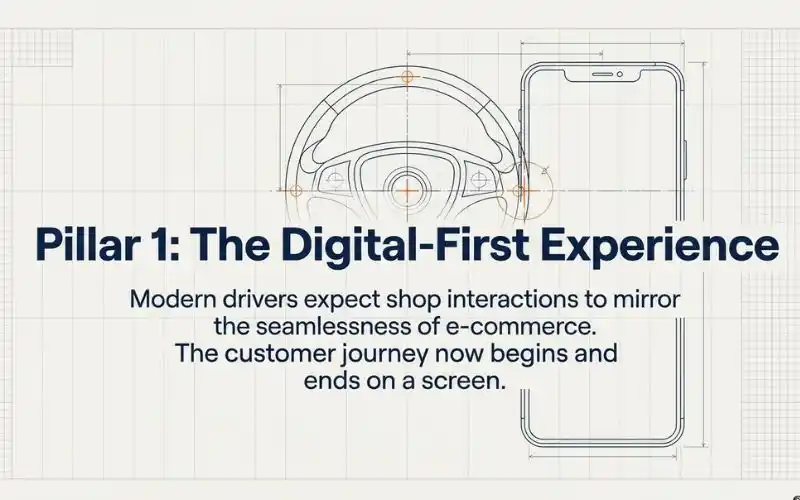
Drivers now expect the same convenience from a repair shop that they get from any online service. More than 70% of consumers now look for features like digital communication and transparent service updates before choosing a shop. This number keeps climbing every year. Shops that still rely only on phone calls are losing business to competitors who offer online booking.
Customers want to see availability, pick a time, and get confirmation without waiting on hold. Text updates during the repair process also matter more than ever. Shops that skip this step feel outdated to modern drivers.
Building a strong digital presence takes planning. Our auto repair shop marketing covers all the expect and details of your shop growth
2. EV and Hybrid Repair Readiness
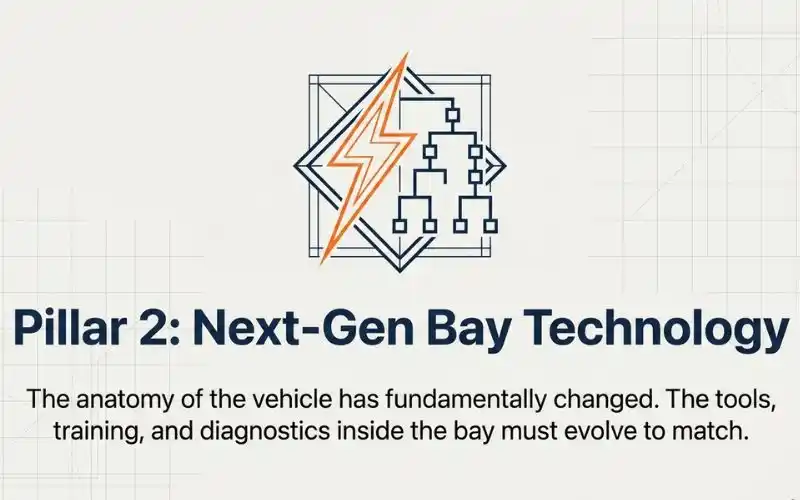
Electric vehicles are no longer a small niche market. The automotive market will see more than 25% of new passenger vehicle sales dedicated to electric vehicles by 2026, according to Maclane’s Automotive industry analysis
This shift changes what shops need to know and own. Electric vehicles use high voltage battery systems together with special cooling systems, regenerative braking technology, and unique engine compartment designs. Traditional repair training does not fully prepare technicians for this work.
Shops without EV certified staff will lose these repair jobs to specialized competitors. Training technicians now, before demand peaks, puts your shop ahead of the curve. Battery diagnostics and electrical system repair are becoming core skills, not optional extras.
3. ADAS Calibration Becomes Standard Work
Modern vehicles come loaded with cameras and sensors that support lane keeping, blind spot monitoring, and adaptive cruise control. Safety systems need to undergo electronic scanning together with calibration processes after technicians complete sensor and camera repairs or replacements, according to Maclane’s Automotive.
After almost any repair involving the windshield, bumper, mirrors, or suspension, these systems often need recalibration. Skipping this step can leave safety features misaligned, which creates real risk for drivers.
Shops without calibration equipment often send this work to outside vendors. That means lost revenue and longer wait times for customers. Investing in calibration tools keeps repairs in house and builds trust with safety conscious drivers.
4. The Technician Shortage Keeps Growing
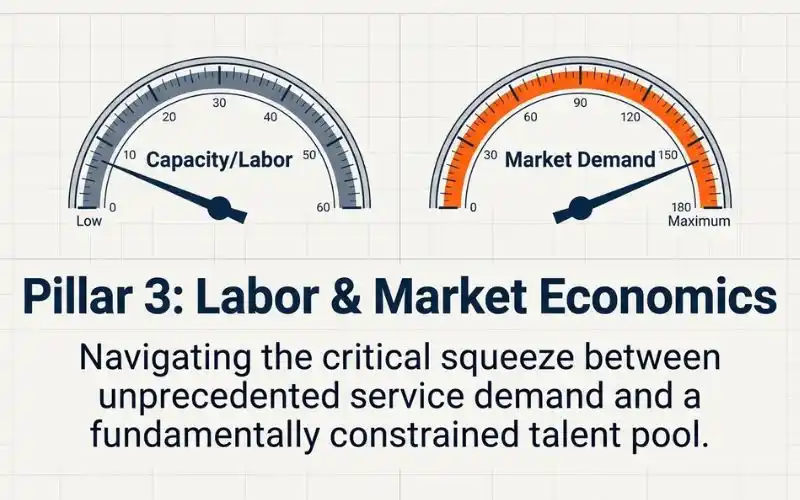
Finding skilled technicians remains one of the toughest challenges shops face today. According to Auto Care Association survey data compiled by IMR, 23.8% of shops report difficulty finding qualified or responsible technicians, while 30.0% of shops say staying current with diagnostic tools and software updates is a challenge.
This shortage affects scheduling, turnaround time, and overall shop capacity. Fewer new technicians are entering the trade compared to years past. Shops competing only on pay are struggling to keep good employees long term.
Positive work culture, ongoing training, and clear paths for advancement matter more now. Shops that invest in their teams see less turnover and stronger workmanship. A stable team also means more consistent service for every customer who walks through the door.
5. AI Powered Diagnostics Save Time and Money
Artificial intelligence is changing how technicians identify vehicle problems. These tools scan vehicle data, compare patterns, and flag likely issues faster than manual diagnosis alone.
Faster diagnostics mean shorter wait times for customers and higher car counts for shops. Technicians spend less time guessing and more time repairing. This also reduces comebacks, since problems get identified correctly the first time.
As vehicles become more computerized, relying only on manual diagnostic methods becomes less practical. Shops that adopt AI powered tools position themselves as more efficient and more accurate than shops still working the old way.
6. Digital Vehicle Inspections Build Trust
Customers want proof, not just a verbal explanation of what is wrong with their car. According to RepuClinic’s analysis of leading shops, the most competitive shops are deploying mobile tools and digital inspection systems during the repair process itself, not just at intake.Repuclinic
Technicians complete digital vehicle health checks that automatically generate customer facing reports with photos and video clips showing the exact issue. Customers can review this information before agreeing to any repair.
This approach speeds up approval time and reduces back and forth phone calls. It also protects the shop if a customer later questions what was found. The auto repair industry has struggled with trust for decades. Transparency through digital reporting helps close that gap.
7. Customer Retention Beats Constant New Customer Chasing
With staffing limited across the industry, many shops cannot handle a constant flood of new customers. According to RepuClinic, shops are placing increased focus on customer retention as labor shortages continue to limit capacity for growth.
Keeping existing customers coming back is often more valuable than winning new ones. Retention requires less marketing spend and creates steadier, more predictable revenue. Loyalty programs, service reminders, and consistent communication all support this goal.
If your shop cannot add more bays or staff this year, focusing on the customers you already have is the smarter path. For more strategies on this approach, read auto repair shop marketing strategies.
8. Online Reviews Decide Which Shop Gets the Call
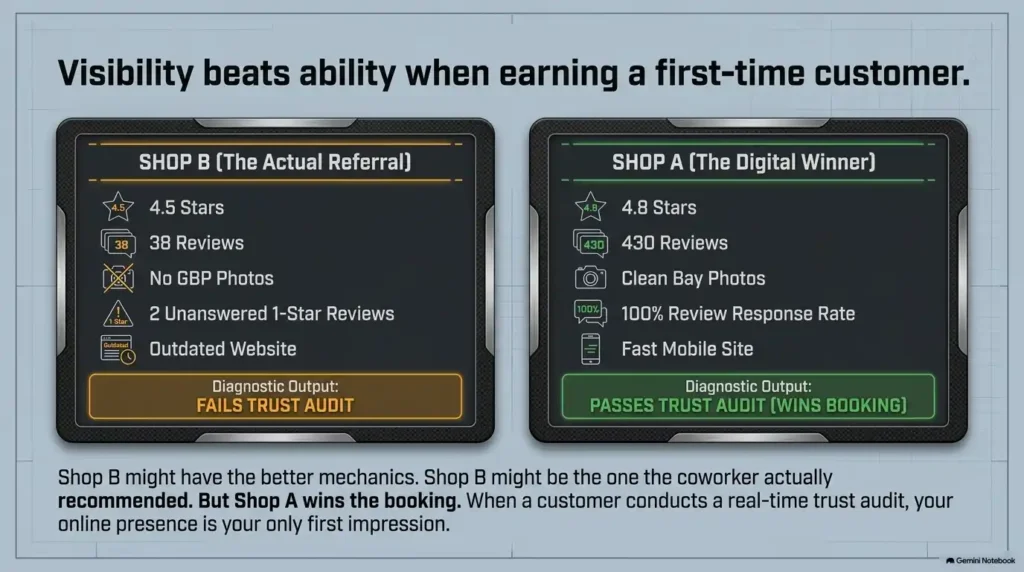
Before a customer ever picks up the phone, they check reviews. Star ratings, recent feedback, and photos shape a customer’s first impression of your shop.
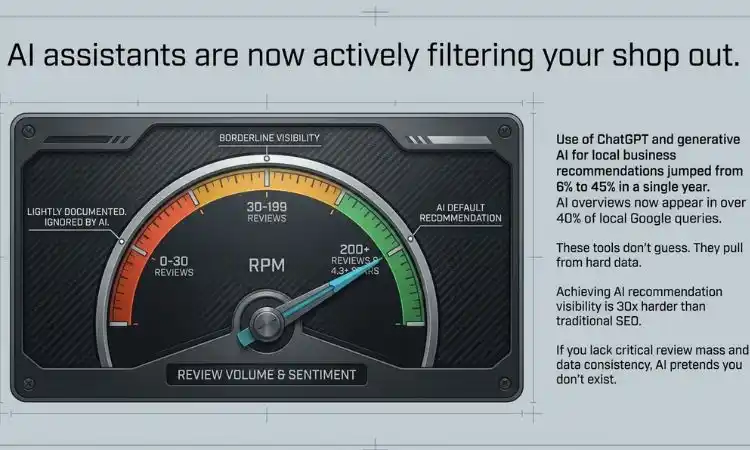
A shop with strong, recent reviews wins the choice over a shop with few or outdated ones. Responding to reviews, whether positive or negative, shows customers that your shop values feedback. This builds credibility before any conversation even starts.
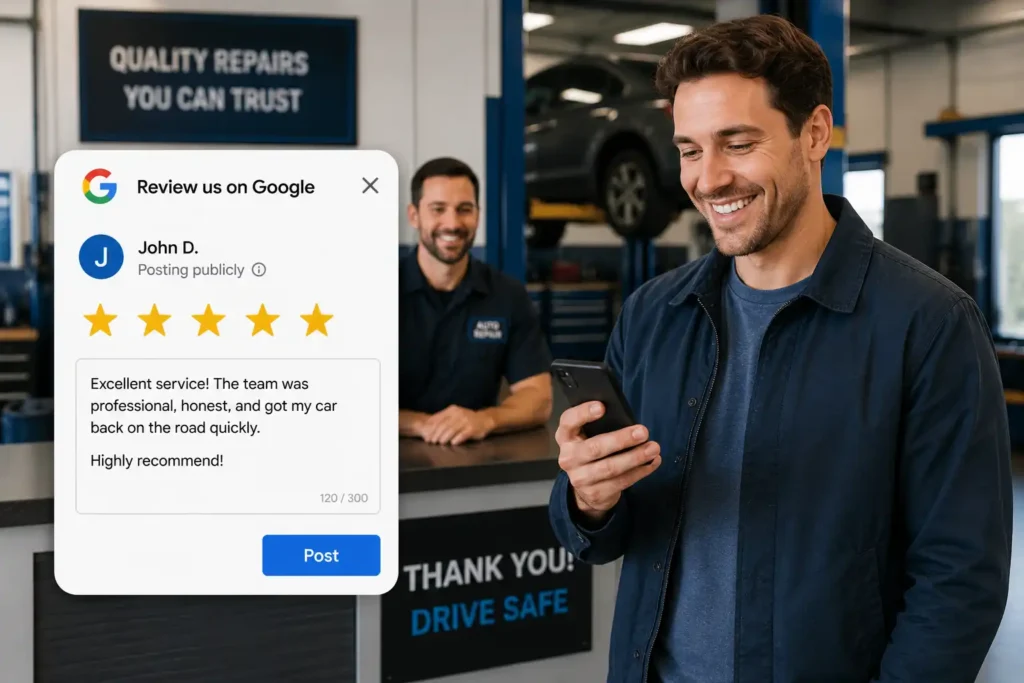
Review management should be a regular part of shop operations, not an afterthought. Asking satisfied customers to leave feedback after service is a simple habit that pays off over time. Tools like Google Business Profile make it easy to monitor and respond to reviews in one place.
9. Aging Vehicles Mean More Repair Work
Cars are staying on the road longer than in previous years. According to Mordor Intelligence’s automotive service market report, average vehicle age reached 12.6 years in 2024, creating a structural tailwind as units between six and fourteen years now form the largest service group.Mordor Intelligence
This creates steady, ongoing demand for mechanical work rather than routine maintenance alone. As vehicles pass the ten year mark, they often need more involved repairs like suspension work, electrical fixes, and major component replacement.
Shops that understand this shift can build service offerings around older vehicles. This segment of drivers tends to stick with one trusted shop for years, which supports long term, stable revenue.
10. Local SEO and Smart Lead Generation Drive Growth
Ranking high on Google Maps and local search results brings customers directly to your shop. Many drivers now research shops online, checking photos and reviews before ever calling.
Shops that ignore local search visibility miss out on free, high intent website traffic. An optimized Google Business Profile, consistent business information, and location specific content all support better rankings.
Pairing strong local SEO with a clear lead generation plan turns online searches into booked appointments. This guide on lead generation strategies for auto repair shops walks through practical steps for building this system.
Final Thoughts
The shops that succeed in 2026 will be the ones that adapt early to these shifts. Investing in technicians, technology, and digital presence pays off over time.
Whether your shop operates in Houston, Austin, or Dallas, these trends apply across the state. Start by focusing on one or two areas from this list. Build from there, and your shop will stay ahead of the competition all year long.
Auto repair shops in Houston compete with hundreds of other shops nearby. Drivers search Google the moment their car makes a strange noise. If your shop does not show up, you lose that customer. Lead generation is not a one-time task. It is an ongoing system that brings new customers every week.
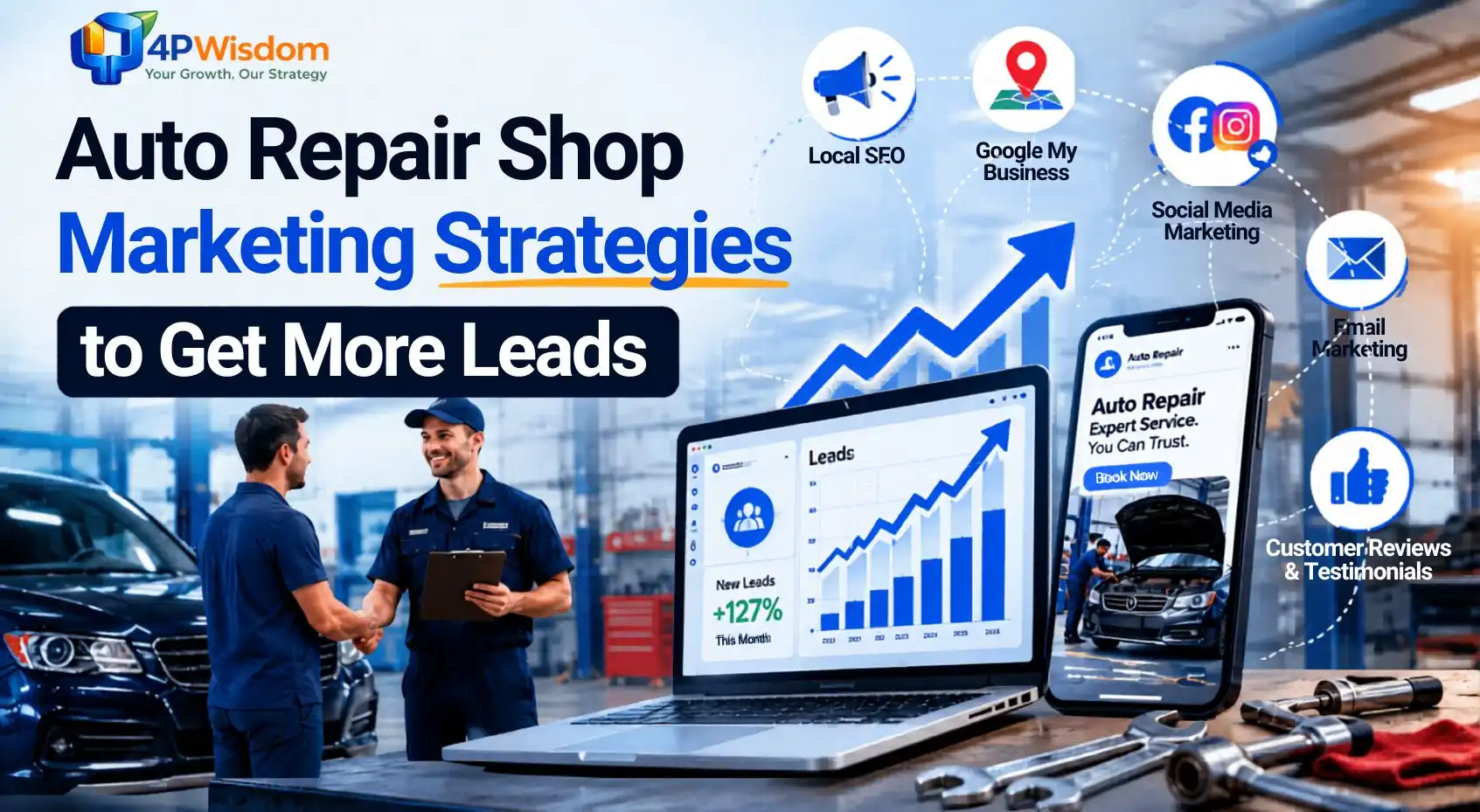
This guide breaks down the 15 best lead generation strategies for auto repair shops. Every strategy includes a real example you can copy in Houston or any other Texas city. Start with a few strategies, then add more as your shop grows. Let us get your bays full and your phones ringing.
Here is what we will cover:
Optimize Google Business Profile (GBP) and Local SEO
Google Ads and Local Service Ads (LSA)
Build a Mobile-Friendly Website with Clear CTAs and Online Booking
Content Marketing and Blogging
Set Up Automated Email and SMS Campaigns
Social Media Marketing with Visual Proof
Referral and Loyalty Programs
Online Marketplaces and Directories
Video Marketing and YouTube
Live Chat, Retargeting, and Remarketing
Fleet and Commercial Partnerships
Launch a Referral Program with Unique Tracking Codes
Support and Sponsor Local Community Events
Boost Lead Generation with Smart Technology
Create an Automated Customer Re-Engagement Workflow
1. Optimize Google Business Profile (GBP) and Local SEO
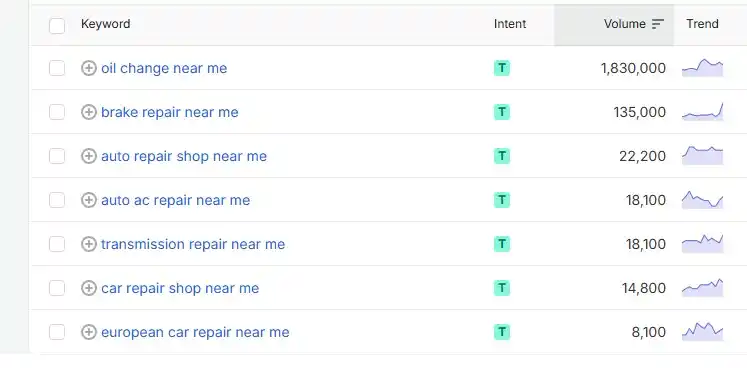
Your Google Business Profile is often the first thing customers see. It shows up when someone searches “auto repair near me” on Google Maps. A complete profile builds trust before a customer even calls.
Add your real shop name, address, and phone number. Keep these details the same across every website and directory. This match is called NAP, and it helps your local rankings. Upload clear photos of your shop, your team, and your bays. List every service you offer, from oil changes to transmission repair. Ask happy customers to leave Google reviews after every visit, then reply to each one within a day or two.
Quick wins:
Add service areas like Katy, Spring, and Sugar Land near Houston.
Post weekly updates about specials, hours, or new services.
Add an FAQ section that answers common repair questions.
Use local keywords such as brake repair Houston in your business description.
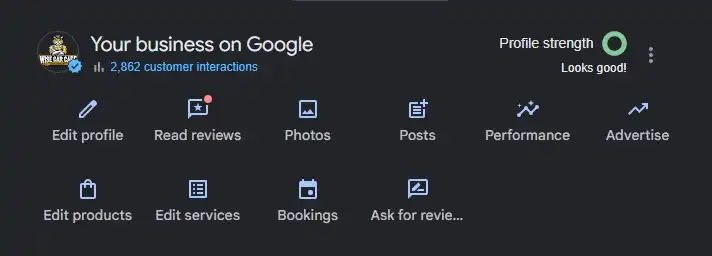
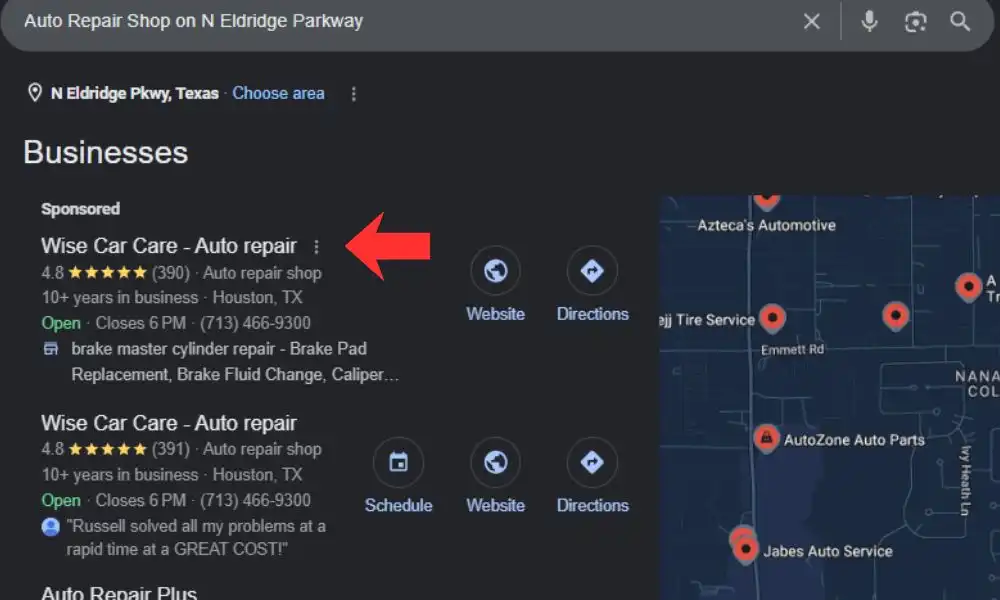
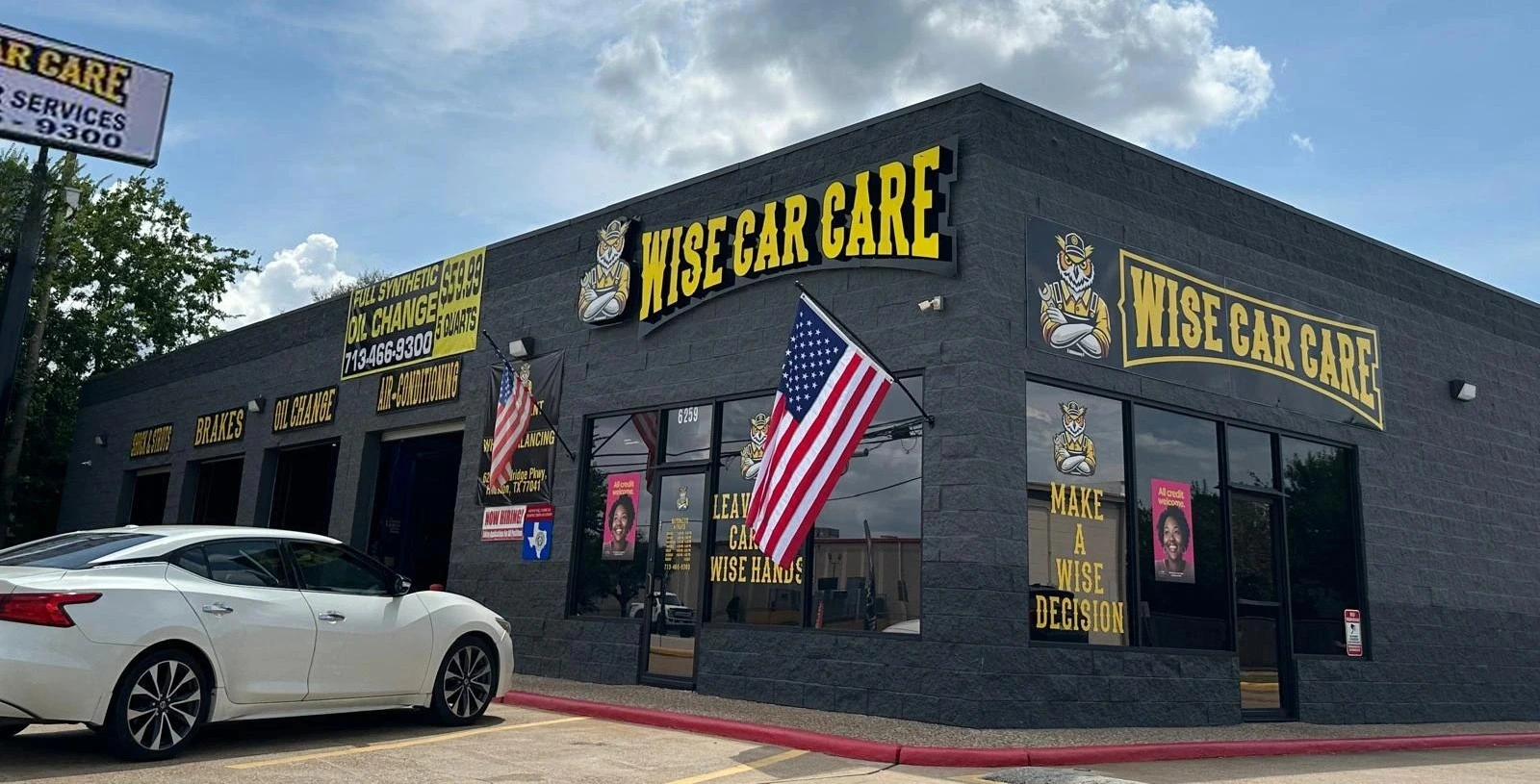
Example: We worked on Wise Car Care, an independent auto repair shop at North Eldridge Parkway in Houston. The focus was on improving their local visibility by consistently updating their Google Business Profile each week. Within three months, the impact was clear, with calls from the Google Map Pack doubled.
To strengthen engagement, the owner began adding real photos of every technician along with authentic before-and-after images of brake repair jobs. This helped build trust and transparency with potential customers. During the same period, their review count increased from 302 to 395, reflecting stronger customer engagement and improved reputation online.
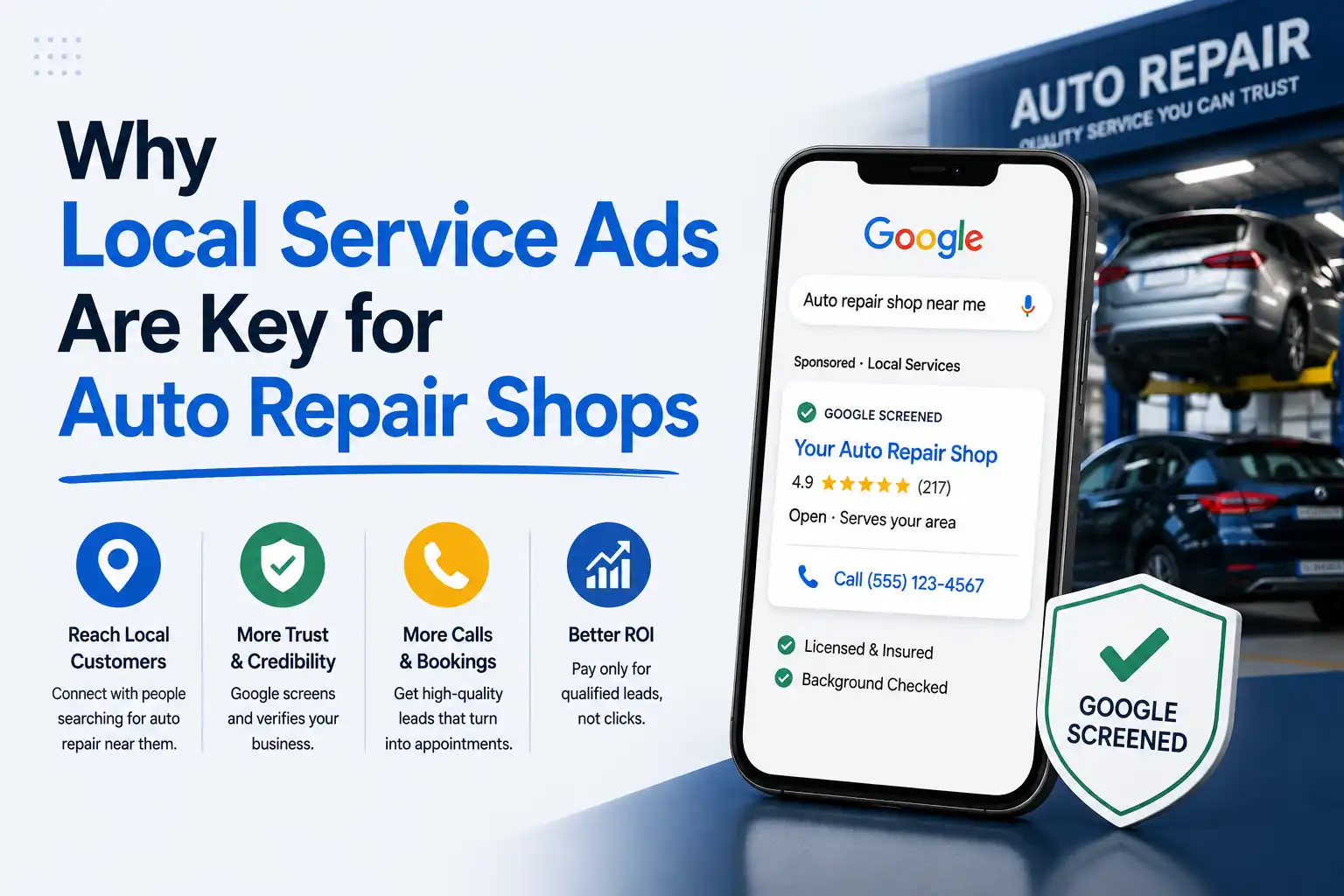
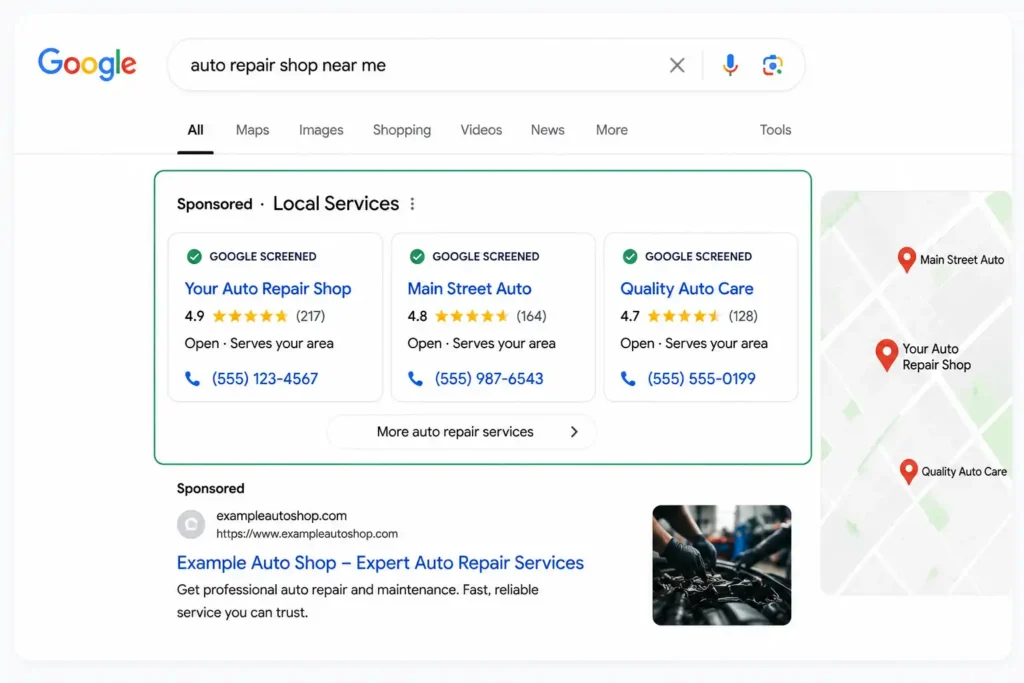
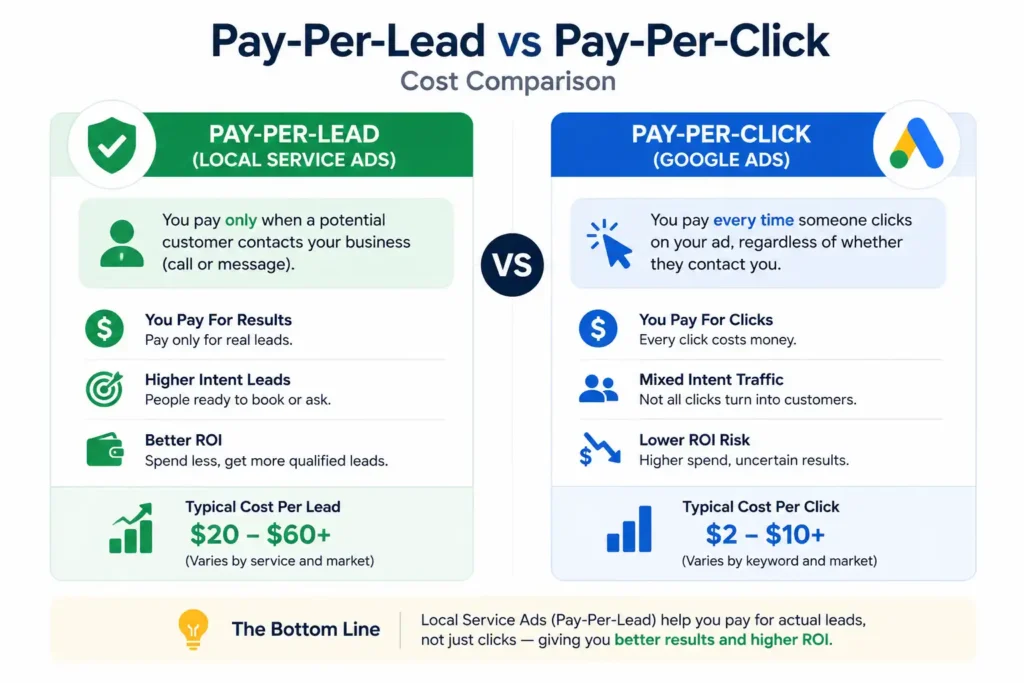
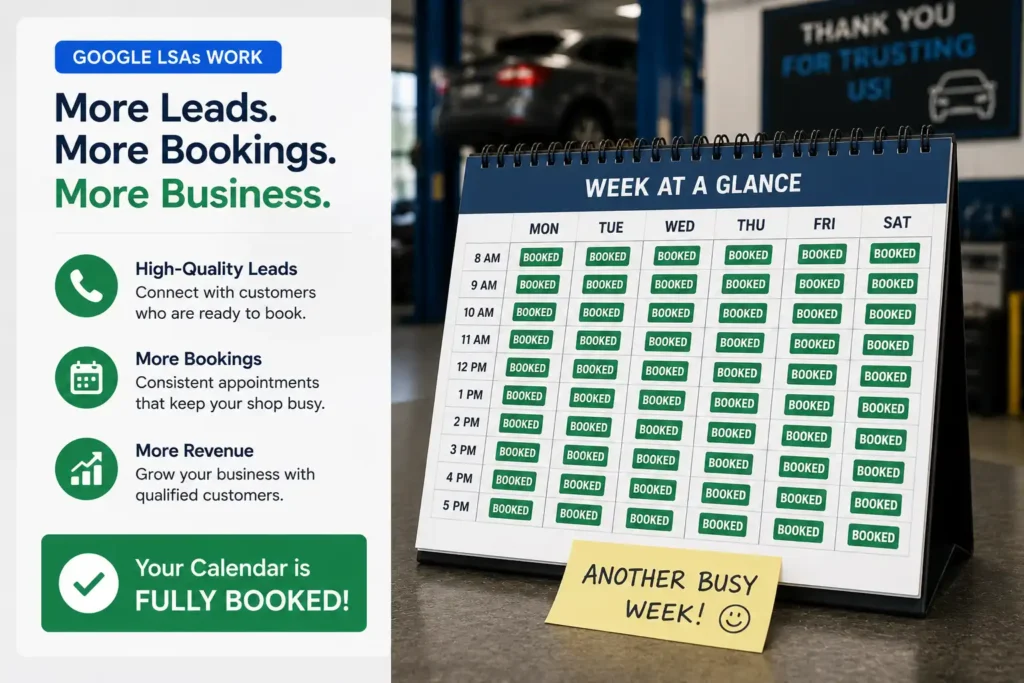
Paid ads put your shop at the very top of search results. Local Service Ads work differently from regular Google Ads campaigns. With LSA, you only pay when a real customer calls or messages your shop.
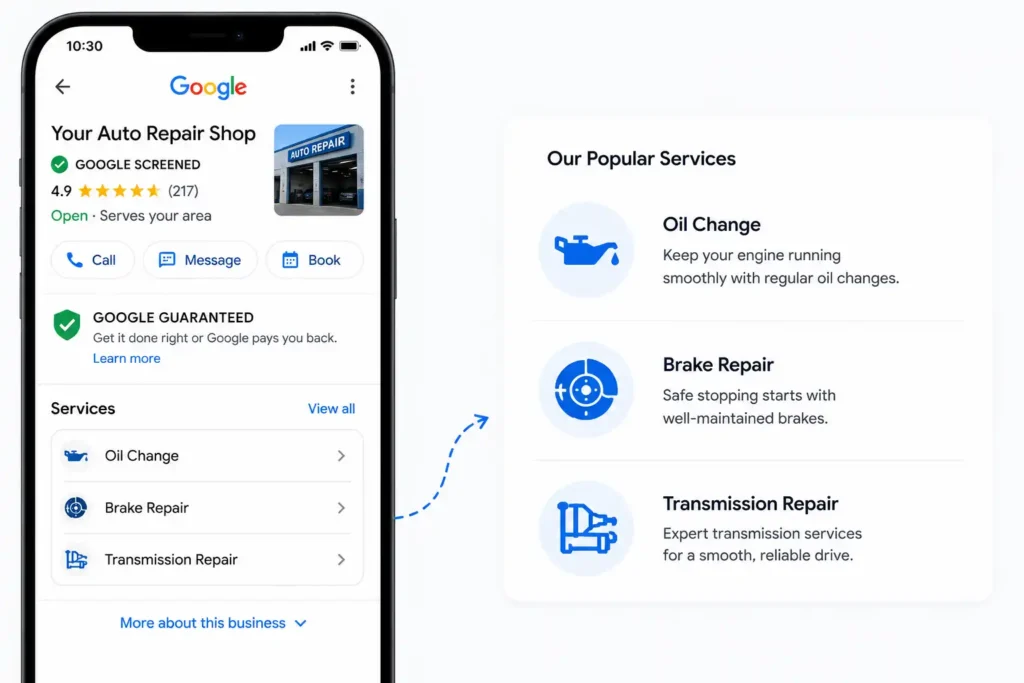
Google also adds a Google Guaranteed badge to verified shops. This badge tells drivers that Google has checked your license and insurance. That single badge builds instant trust with new customers searching nearby. Regular Google Ads still work well for specific, high-value jobs, like transmission repair or full engine diagnostics.
Quick wins:
Run Search Ads for high-margin services like transmission repair.
Add call tracking so you know which ad brings each lead.
Apply for the Google Guaranteed badge through Local Service Ads.
Set a daily budget you can track and adjust every week.
3. Build a Mobile-Friendly Website with Clear CTAs and Online Booking
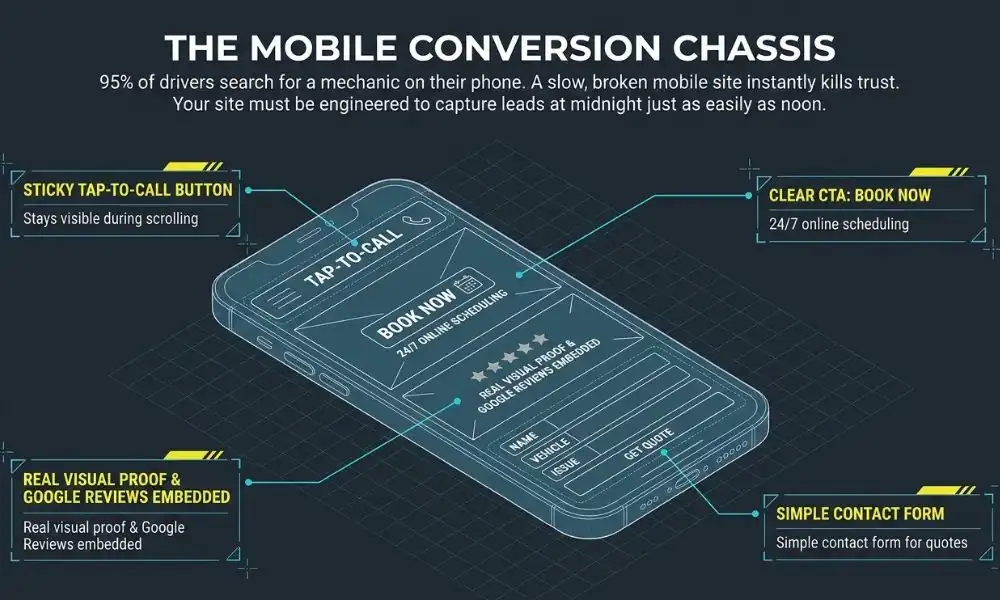
95% of drivers search for a mechanic on their phone, not a desktop. If your website loads slowly or looks broken on mobile, you lose leads instantly. Your site should load fast and feel simple to use on any phone.
Every page needs a clear call to action, like “Book Now” or “Call Today.” Add online booking so customers can schedule a visit even at midnight. A tap-to-call button should sit at the top of every page.
Quick wins:
Add a sticky call button that stays visible while scrolling.
List your services clearly, with pricing if you can share it.
Show real customer reviews right on your homepage.
Add a simple contact form for quotes and quick questions.
Most car owners search Google before they trust any mechanic with their car. Blog posts answer their questions and build trust before they even call. Write about topics customers already search for every day.
Think “how often should I change my oil” or “signs of bad brakes.” Evergreen content like this keeps bringing in traffic for years. Add a clear link to your booking page inside every post you publish.
Quick wins:
Answer one common customer question in each blog post.
Add a Location -specific service page for top services like brake repair.
Use simple words that a non-mechanic can easily understand.
Link every blog post to your booking page and contact page.
Example: A Houston quick lube shop wrote a post titled “Signs Your Car Needs an Oil Change Now.” That single post still brings in five booking calls a month, two years later. This blog post is itself an example of content marketing in action.
5. Set Up Automated Email and SMS Campaigns
Email marketing still delivers one of the highest returns in all of marketing. Recent studies show businesses earn $36 to $42 back for every dollar spent. Automated emails keep your shop in front of customers without extra daily work.
Set up reminders for oil changes, tire rotations, and yearly inspections. SMS messages get opened faster than almost any other marketing channel. Use text reminders before appointments to cut down on no-shows.
Quick wins:
Send a reminder email six months after every oil change.
Text customers a day before their scheduled appointment.
Send a special offer email on slow business days.
Automate a thank-you message right after every visit.
Example: A Houston general repair shop set up automatic six-month service reminders. The shop booked 18 extra appointments in the first month alone. Appointment text reminders also cut their no-show rate in half.
6. Social Media Marketing with Visual Proof
Facebook and Instagram help drivers see the real work behind your shop, before and after photos build trust faster than almost anything else. Post real repairs, real technicians, and real customer reactions every week.
Avoid generic stock photos, since customers can spot them right away. Run small ad budgets to reach drivers within a few miles of your shop. Consistency matters more than fancy editing or expensive equipment.
Quick wins:
Post a before-and-after photo at least twice a week.
Share short videos that explain common repairs in plain words.
Run a Facebook ad targeting drivers within 10 miles of your shop.
Reply to every comment and message within a few hours.
Example: A Houston tire shop posted a short video showing a routine tire rotation. The post reached over 8,000 local drivers and brought in 12 new calls. The owner now posts three times a week with steady results.
Happy customers are your best, cheapest source of new business. A simple referral program turns one good customer into three new ones. Offer a discount to both the customer and the friend they send you.
Loyalty programs reward customers for coming back instead of shopping around town. Give points for every visit that customers can use toward future repairs. Small, steady rewards keep your shop top of mind all year.
Quick wins:
Offer $25 off to both sides of every referral.
Give a free tire rotation after five paid visits.
Print referral cards that customers can hand to friends and family.
Track every referral so you know your best promoters.
8. Online Marketplaces and Directories
Many drivers check directories like Yelp before they even search Google. Listing your shop on several directories raises your overall visibility online. Keep your business name, address, and phone number identical everywhere.
Inconsistent details confuse search engines and can hurt your local rankings. Respond to reviews on every platform, not only Google. Treat each directory like a small piece of your storefront.
Quick wins:
Claim your shop on Yelp, Bing Places, and Apple Maps.
Add a detailed service list to every directory profile.
Upload the same high-quality photos across all platforms.
Check for new reviews on every directory each week.
Example: We ran Yelp Ads for Wise Car Care, and within the last 30 days, total leads increased by 211%. This improvement came from increased visibility on Yelp and better reach to customers actively searching for auto repair services in the local area.
Video builds trust faster than text or photos ever could alone. Drivers want to see who is working on their car before they book. Short YouTube videos that explain common repairs answer questions before customers even ask.
These videos also rank well in Google search results over time. You do not need fancy equipment, just a phone and good lighting. Keep each video short, clear, and focused on one repair.
Quick wins:
Film a two-minute video explaining a common repair, like brake pads.
Add captions, since many people watch videos without sound.
Link every video back to your website and booking page.
Post one new video each month to build a steady library.
10. Live Chat, Retargeting, and Remarketing
Not every website visitor calls right away, and that is normal. Live chat lets nervous customers ask quick questions before they commit. Retargeting ads bring back visitors who left your site without booking.
These ads remind drivers about your shop while they browse other sites. Remarketing keeps your shop top of mind during the whole decision process. A small daily budget can cover this for most shops.
Quick wins:
Add a simple live chat widget to your homepage.
Set up a retargeting pixel through Google Ads or Meta Ads.
Show a special offer to people who visited but never booked.
Keep every retargeting ad simple, with one clear offer.
11. Fleet and Commercial Partnerships
Local businesses with company vehicles need regular, reliable maintenance too. One fleet contract can bring steady, predictable revenue every single month. Reach out to delivery companies, contractors, and any business with several vehicles.
Offer a discounted rate in exchange for guaranteed, repeat business. This steady work also keeps your bays full during slow weeks. Treat fleet clients like long-term partners, not one-time jobs.
Quick wins:
Create a simple one-page flyer for fleet services.
Offer priority scheduling for fleet customers to win them over.
Visit local businesses in person instead of only calling.
Set clear pricing for routine fleet maintenance packages.
Example: We worked with Wise Car Care to build strategic partnerships with multiple local businesses that operate vehicle fleets. These relationships now generate steady, recurring monthly revenue for Wise Car Care throughout the year. By becoming a trusted service provider for fleet maintenance and repairs, the shop has created a reliable stream of high-volume work beyond one-time retail customers.
12. Add Coupons with Trackable Offers
Coupons are most effective when you can track where every customer comes from. Create unique coupon codes or QR-based offers for different marketing channels such as Google Ads, Facebook, walk-ins, or printed flyers. This helps you clearly understand which campaigns are actually bringing in paying customers.
Without tracking, coupons become guesswork—you can’t tell what is driving revenue. By assigning a code to each source, you can quickly identify your best-performing channels and focus your budget on what works. You can also adjust or stop underperforming campaigns based on real data.
Over time, this system helps you optimize marketing spend while consistently attracting new customers through targeted discounts.
Quick wins:
Create unique coupon codes for each marketing channel (Google, Facebook, in-store, referrals).
Add QR codes that link directly to a coupon landing page.
Track redemptions in your shop software or a simple spreadsheet.
Rotate offers monthly to keep customers engaged.
Highlight top-performing coupons and scale those campaigns.
13. Support and Sponsor Local Community Events
Sponsoring a local event puts your shop name in front of new faces. Think youth sports teams, school fundraisers, or neighborhood festivals nearby. This builds goodwill and makes your shop feel like part of the community.
Bring a simple lead capture tool, like a free car check booth. Hand out flyers with a QR code linking back to your website. Follow up with everyone you meet within a week of the event.
Quick wins:
Sponsor a local Houston Little League team for a season.
Set up a free tire pressure check booth at a community event.
Collect emails or phone numbers from everyone you meet.
Follow up with new contacts within a week of the event.
14. Boost Lead Generation with Smart Technology
Missed calls mean missed business, especially after hours and on weekends. Many shops now use an AI receptionist that answers calls around the clock. These tools can book appointments, answer common questions, and forward urgent calls.
A website chatbot can also answer simple questions instantly, day or night. Online booking systems send automatic reminders that cut down on no-shows. Smart tools fill the gaps your team simply cannot cover alone.
Quick wins:
Add an AI receptionist or answering service for after-hours calls.
Use a website chatbot for quick, common customer questions.
Set up automatic appointment reminders through your booking system.
Track which calls come from each tool to measure results.
15. Create an Automated Customer Re-Engagement Workflow
Some customers get a quote, then disappear without booking the service. Others have not visited your shop in over a year. A re-engagement workflow reaches out to these customers automatically.
Send a friendly email checking if they still need that repair. Follow up with a phone call and a limited-time discount offer. This turns old, cold leads into fresh, booked revenue.
Quick wins:
Pull a list of customers with quotes older than 30 days.
Send a check via email, then a short phone call.
Offer a small, time-limited discount to bring them back.
Track how many old leads return to your shop each month.
Quick Answers to Common Questions
How long does it take to generate leads for an auto repair shop?
Google Ads and Local Service Ads can bring calls within a week. Local SEO and content usually take 60 to 90 days to build momentum.
What is the cheapest way to get leads for a mechanic shop? Google Business Profile optimization and referral programs cost very little money. Both rely mostly on your time and your existing happy customers.
How many leads should an auto repair shop get each month? This depends on your bay count, staff, and local market size. Track your numbers monthly so you always know what good looks like.
Final Thoughts
You do not need to start all 15 strategies at once. Pick three or four that fit your shop and budget today. Track every lead so you know exactly what is working. Drop the tactics that bring no results, and double down on what works. Houston shops that mix local SEO, paid ads, and follow-up win the most new customers.
Grow Your Auto Repair Shop with 4P Wisdom
Running a busy shop leaves little time for marketing and tracking ads. That is exactly where 4P Wisdom comes in. 4P Wisdom is a Houston-based digital marketing agency built for auto repair shops. We have spent years helping shops rank higher, get more calls, and book more jobs.
Our team handles Google Business Profile optimization, Google Ads, websites, and content, all under one roof. We already help auto repair shops across Texas turn searches into booked appointments every single month.
If you want more calls and more cars filling your bays, talk to us. Get a free auto repair growth audit and see exactly where your shop stands today. You can also reach our team directly through our contact page.
A driver’s check engine light just turned on. They grab their phone immediately. They type “auto repair shop near me” without thinking twice. Who shows up first wins that customer.
That’s the reality of local automotive search today. Traditional word-of-mouth still matters. But digital visibility now decides who gets the call.Google Local Service Ads (LSAs) have completely changed the game for independent auto repair shops.
If your shop isn’t using LSAs yet, you’re leaving real money on the table. This guide breaks down exactly why LSAs are no longer optional; they’re essential.
What Exactly Are Local Service Ads?
Local Service Ads are a pay-per-lead advertising format from Google. They appear at the very top of search results. They sit above organic listings, Google Maps results, and even traditional Google Ads.
When someone searches for “auto repair near me,” these ads appear first. They display your business name, the “Google Guaranteed” badge, and direct contact options.
Think of them as Google personally recommending your shop. That’s a powerful trust signal for any new customer.
1. You Appear at the Very Top of Google
Position matters more than almost anything in digital marketing. Most users never scroll past the first few results. Appearing at the top means more eyes on your shop.
LSAs secure that coveted top position, ensuring potential customers see your business first. This prime real estate dramatically increases your chances of capturing high-intent searchers.
Shops running Local Service Ads alongside traditional Google Ads see 30–50% more total leads. LSAs capture the top of the search results, while Google Ads capture the next tier.
That’s a significant competitive edge over shops not running LSAs.
2. The Pay-Per-Lead Model Saves You Real Money
Traditional pay-per-click (PPC) advertising charges you for every click. Clicks don’t always turn into calls. Calls don’t always turn into booked jobs. That’s a lot of wasted budget.
With LSAs, you only pay when a real customer calls to book a service, not when someone casually clicks on your ad. This means your budget goes further, and every dollar works harder.
For auto repair shops, the cost per lead typically falls somewhere between $20 and $120. This varies based on your location, competition, and the specific services you offer.
For shops operating on tight margins, this model is a breath of fresh air.
3. The Google Guaranteed Badge Builds Instant Trust
Trust is everything in the auto repair industry. Customers are handing over their vehicles and their wallets. They need to feel confident in who they’re choosing. The green Google Guaranteed badge instantly builds trust with potential customers. It tells people that Google has verified your shop and stands behind your work.
In the auto repair industry, trust is essential. When your ad appears with a “Google Guaranteed” badge next to it, it sends a powerful signal that your garage is trustworthy and vetted. This badge alone can be the deciding factor for a new customer choosing between two shops. It’s not just marketing, it’s credibility you can’t buy any other way.
4. You Only Reach Customers Who Are Ready to Buy
Not all traffic is equal. Someone browsing for fun is very different from someone with a broken-down car. LSAs are built to capture the second type of person.
When someone searches for a specific repair service and calls directly from Google’s results, they’re typically further along in their decision-making process. These customers have an immediate need and are actively seeking solutions.
LSAs prioritize customers in your service area, ensuring your ad budget focuses on leads that are most likely to visit your shop.
This hyper-local targeting means less time talking to price-shoppers and more time booking real jobs.
5. Mobile-First Booking Meets Customers Where They Are
The majority of local searches happen on mobile devices. Customers want to call or book without visiting a website. LSAs make this incredibly easy.
Mobile-first booking makes it easy for customers to call, message, or book services right from the ad on their mobile device without ever having to visit your website. For auto repair shops that might not have the most optimized or mobile-friendly website, this can be a big benefit.
Even if your website isn’t perfect, LSAs ensure customers can still reach you instantly. That’s a meaningful advantage for many independent shop owners.
6. Google Reviews Directly Fuel Your Ad Ranking
Your online reputation and your LSA performance are directly connected. The better your reviews, the better your placement. It’s that simple.
In 2025, the number and quality of your Google reviews play a bigger role in where your LSAs show up. Garage shops with consistently high star ratings and recent positive reviews are more likely to appear at the top of the LSA carousel.
Encouraging satisfied customers to leave reviews is crucial. Being Google Guaranteed gives your business more credibility and helps rank your ad higher in searches.
Every five-star review your shop earns is a direct investment in your ad visibility. Make review collection a standard part of your customer experience.
7. Voice Search Is Opening a New Channel
Smart speakers and voice assistants are everywhere now. “Hey Google, find an auto repair shop near me” is a real search being made daily. LSAs are built to show up for these queries.
Smart speakers and voice assistants are becoming more and more popular, which means voice searches for local businesses are on the rise. LSAs are designed to be compatible with these voice searches, giving repair shops one more avenue for being discovered.
This is a channel most shops haven’t even begun to think about yet. Early movers will have a distinct advantage as voice search keeps growing.
8. You Can Showcase Specific Services
Oil changes, brake repair, transmission service, tire installation — these are different searches with different customer intents. LSAs allow you to list them all specifically.
Google has expanded the service types you can list under LSAs, which means that auto shops can now showcase specialties like transmission repair, tire installation, or oil changes.
This granular categorization means your shop appears for the exact services customers are searching for, not just a generic “auto repair” result.
9. What Does Getting Started Actually Look Like?
Getting your LSAs live isn’t complicated. Google has a clear verification process that actually works in your favor.
The Google verification process typically takes 3–5 business days. Once approved, your ads can start appearing immediately for relevant searches in your area.
Here’s a quick overview of what you’ll need:
An active Google Business Profile
Valid business license and insurance documents
A clean background check for relevant personnel
At least a few verified Google reviews
A defined service area covering your target zip codes
To maximize LSA performance, shops need consistent positive reviews, quick response times (Google tracks this), proper licensing verification, and accurate service area definitions.
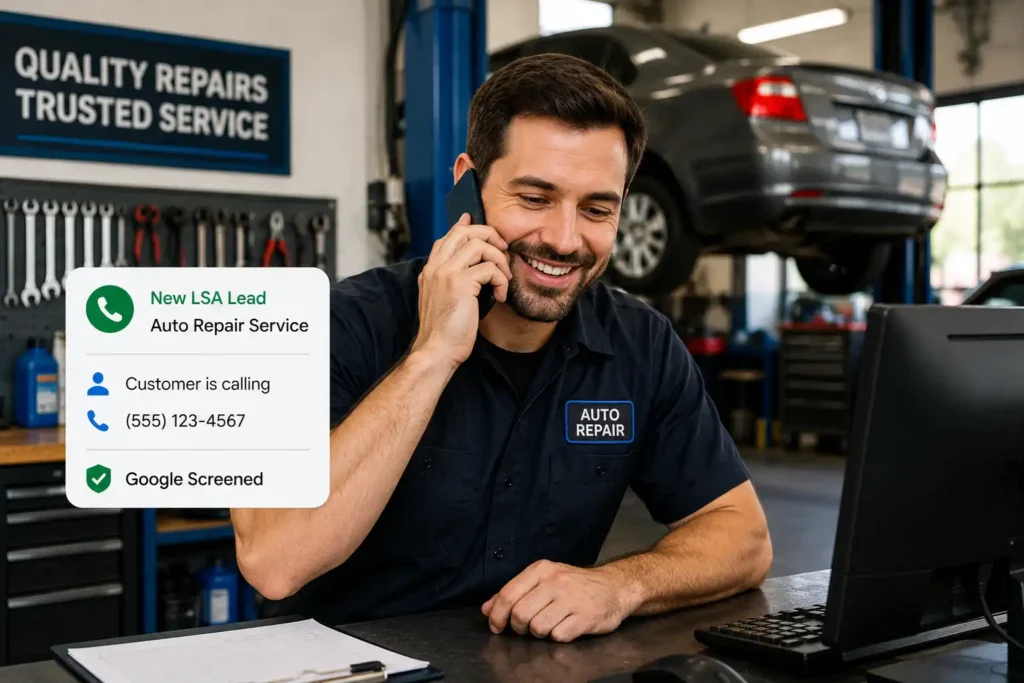
Pro Tip: Google tracks how quickly you respond to leads. Fast response times improve your ad ranking directly. Set up notifications on the LSA app so you never miss a lead.
10. The Window of Opportunity Won’t Stay Open Forever
Here’s the truth about LSAs right now: costs are still relatively affordable. That won’t last.
Right now, Local Services Ads are hidden gems in the advertising world, offering low cost per lead. But as more shops join, costs will rise. Start today to take advantage of affordable leads.
The shops that get in early will own their local market before competitors even realize what happened. This is one of the most cost-effective growth opportunities in automotive digital marketing today.
LSAs vs. Traditional Google Ads: A Quick Comparison
Feature
Local Service Ads
Traditional Google Ads
Ad Placement
Above all results
Below LSAs
Payment Model
Pay per lead
Pay per click
Trust Signal
Google Guaranteed badge
None
Targeting
Hyper-local
Broad or local
Setup Complexity
Moderate
High
Best For
Phone calls & bookings
Traffic & awareness
For most independent auto repair shops, LSAs should be the first ad investment — not Google Ads. Add traditional PPC later for broader coverage.
Real Talk: What Should Your Monthly Budget Be?
Budget is always the first question. Here’s an honest answer.
The cost varies by market and competition level, but most auto repair shops invest between $1,000–$3,000 per month in ad spend. Typical lead costs range from $20–$50 depending on your location and services.
You can set a monthly budget cap to control your ad spend, ensuring you don’t exceed your comfort zone. If you set a budget for 30 leads per month, Google will provide an estimated range of costs and adjust charges accordingly.
Start conservatively. Track your results carefully. Scale what works. There’s no reason to go all-in before you’ve validated the ROI for your specific market.
Common Mistakes Auto Shops Make with LSAs
Even good shops leave results on the table. Avoid these pitfalls:
1. Slow response times. Google tracks response speed. Missing calls hurts your ranking badly.
2. Ignoring disputes. If you receive a spam call or an invalid lead, dispute it. You can get that money back.
3. Neglecting reviews. LSA ranking is heavily review-driven. Ask every happy customer to leave one.
4. Wrong service area settings. Too wide wastes budget. Too narrow misses real customers.
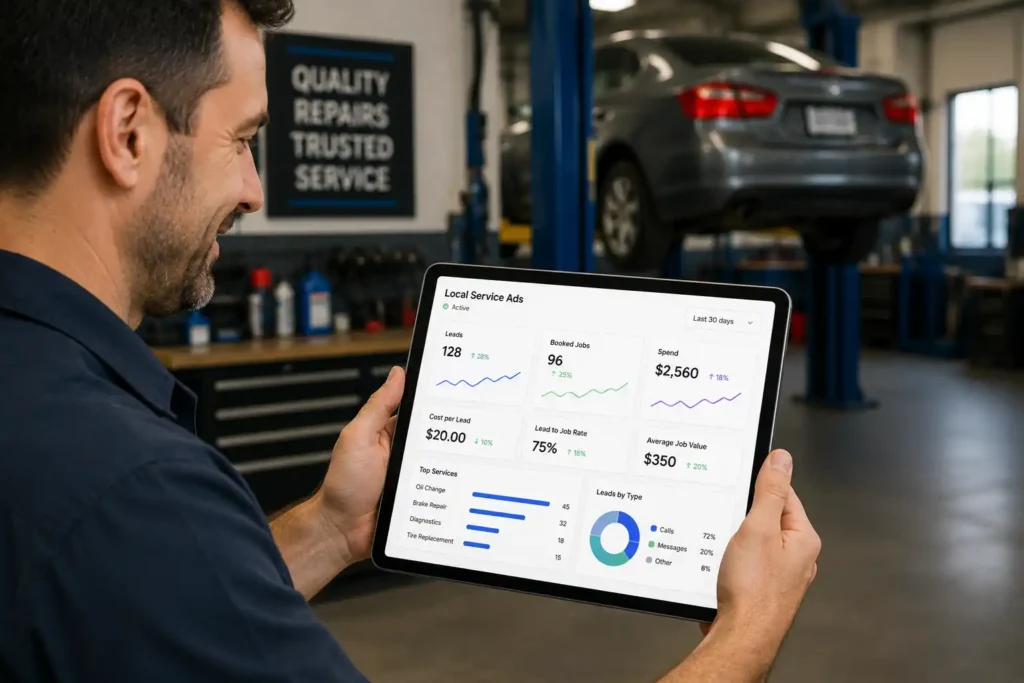
5. Not monitoring the dashboard. Use analytics to track your ad performance, monitor which services get the most calls, and adjust your strategy accordingly. This data-driven approach helps you refine your advertising efforts.
Expert Tip: Combine LSAs with a Strong Google Business Profile
LSAs don’t operate in a vacuum. Your entire Google presence works together as a system.
A well-optimized Google Business Profile (GBP) supports your LSA ranking. Keep your hours updated. Add real photos of your shop and team. Respond to every review — positive and negative. List all your services accurately.
For a deeper dive into how Google Business Profile impacts local search visibility, check out Google’s official Local Services Ads Help Center — it’s the most authoritative resource for understanding verification requirements and optimization best practices.
Frequently Asked Questions
Q: Are LSAs available for auto repair shops everywhere? Currently, LSAs are available for auto repair shops throughout the United States. Availability in other regions continues to expand.
Q: Can I run LSAs and Google Ads at the same time? Absolutely — and it’s recommended. LSAs capture the top tier of search results, while Google Ads capture the next level down. Running both maximizes total lead volume.
Q: How fast will I see results? Most auto repair shop clients begin receiving qualified phone calls within the first week of campaign launch.
Q: What if I get a spam call through LSA? LSAs allow you to filter out junk, so your budget is focused on the customers you want. No more paying for spam calls or irrelevant leads.
Final Thoughts: This Is the Most Important Ad Format for Auto Shops Right Now
The auto repair industry is fiercely competitive at the local level. Every week you wait, a competitor in your area gets stronger. Every call they get is one your shop didn’t.
Local Service Ads give independent auto repair shops the same prime Google real estate that used to belong only to large chains and dealerships. The Google Guaranteed badge makes you credible. The pay-per-lead model makes you efficient. The hyper-local targeting makes every dollar count.
This isn’t a trend. This is how local customers find and choose service businesses right now, today. Get verified. Get listed. Get busy.
I have worked with over 100 independent auto repair shops across the country. The story is almost always the same. Great mechanics. Loyal regulars. But the phone stops ringing when you need it most. The shops that consistently fill their bays don’t have the biggest budgets. They have the smartest systems. This guide covers every strategy that actually works for auto repair shops in 2026. We go deep on local SEO, Google reviews, paid ads, social media, and customer retention. Every strategy has real examples and exact steps you can follow starting today.
First of all, let me tell you some stats. 97% of customers look online before selecting a local service provider, showing how important digital presence has become. Around 46% of all Google searches are driven by local intent, highlighting nearby needs. Additionally, 88% of people trust online reviews just as much as recommendations from friends, making reputation crucial for businesses today.
4P Wisdom offers auto repair shop marketing that helps local repair businesses get more calls, bookings, and loyal customers. We use simple but effective digital marketing strategies like SEO, Google Ads, and social media to grow your online presence. Our clients have seen up to 60% more bookings and 45% more customer inquiries with better local visibility.
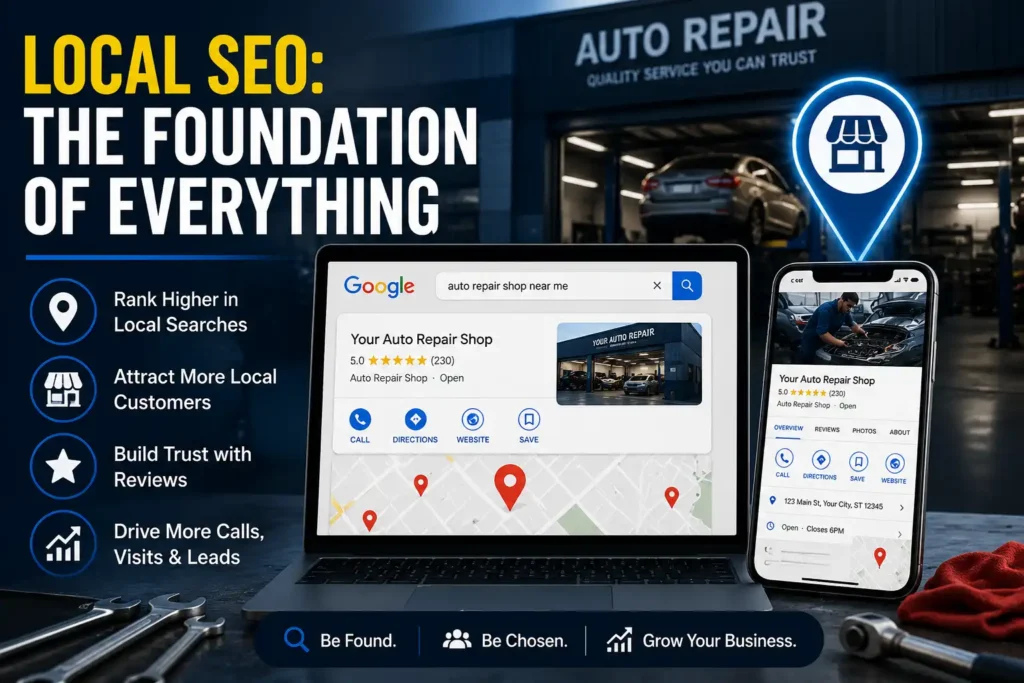
Local SEO: The Foundation of Everything
If people in your city can’t find your shop online, nothing else matters. Local SEO is the single highest-ROI marketing channel for auto repair shops.
Dominate Google Business Profile
Your Google Business Profile (GBP) is the most important marketing asset your shop has. It shows up in Google Maps and the local three-pack. It appears before your website in many searches.
Most shop owners set it up once and forget about it. That is a serious mistake. Google rewards profiles that are actively maintained and regularly updated. Think of it like a social media profile. The more you put in, the more you get out.
Complete Every Section Without Exception
Start with the basics. Make sure your business name, address, and phone number are accurate. These must match exactly what is on your website and everywhere else online. Even small differences in formatting can hurt your local rankings.
Add your correct business category. “Auto Repair Shop” should be your primary category. Then add secondary categories like “Oil Change Service,” “Brake Shop,” and “Transmission Shop.” The more specific your categories, the more searches you appear in.
Write a compelling business description. Mention your city and neighbourhood. Include your key services like oil changes, brakes, transmission, and AC repair. Google reads this description carefully. It influences which searches show your profile.
Upload Fresh Photos Every Week
Profiles with photos get far more clicks than those without. But it is not just about having photos. It is about having new, recent photos. Google’s algorithm favours profiles that add content regularly.
Take photos of your bays and equipment. Show your team at work on vehicles. Photograph before-and-after repairs when the vehicle looks dramatically different. Share photos of your waiting area and front desk. These photos build trust before a customer ever calls.
According to Google, businesses with photos receive 42% more requests for directions. They also get 35% more website clicks. That is a huge difference for almost zero cost.
Post Updates at Least Twice Per Week
Google Posts are a free feature that almost nobody uses. You can post specials, seasonal promotions, and service reminders. Posts appear directly on your Google Business Profile.
Post a “Spring AC Check Special” before summer arrives. Post a “Winter Tire Swap” offer before the cold hits. Post a “Free Battery Check” in November when batteries start failing. These posts cost nothing. They make real calls.
Enable and Monitor Messaging
Turn on the messaging feature in your Google Business Profile. Many customers prefer texting over calling. A quick response to a message can convert a browser into a booking within minutes.
Pro Tip
Add your services individually in the Services section of GBP. Each service you add becomes a keyword Google can match to searches. A shop with 25 individual services listed ranks for far more searches than one with just a general description. I have seen this alone increase phone calls by 30% within 60 days.
Target the Right Local Keywords
Keyword research for auto repair shops is different from other industries. Most of your customers search with their city name. They search for the service they need right now. Your job is to be the first result they see.
Service Plus Location Keywords
The most valuable keywords follow a simple pattern. They combine a service type with a location. These are called geo-modified keywords. Examples include:
“Oil change in [city name]”
“Brake repair near [neighbourhood]”
“Transmission service [city]”
“Check engine light [city]”
“AC repair shop near me”
“Best auto repair shop in [city]”
Use a free tool like Google’s Keyword Planner to find the exact phrases people search in your city. You can also use Semrush orAhrefs for deeper research.
Emergency and Urgent Keywords
Some of your highest-value customers are in distress. Their check engine light just came on. Their brakes are grinding. These customers call the first shop they can find quickly. Targeting urgent keywords captures high-intent customers. Phrases like “emergency auto repair near me” and “same-day brake repair” convert extremely well.
Seasonal Keywords Matter Too
People search for car-related services at predictable times of year. Create content and campaigns around these patterns. Target “car battery replacement” searches more aggressively in autumn. Push “AC service” in late spring. Promote “winter tyre changeover” in early October. Aligning your marketing with seasonal search behaviour drives more leads at a lower cost.
Build Consistent Local Citations
A local citation is any online mention of your shop’s name, address, and phone number. These appear on business directories, review sites, and local websites. Google uses citations to verify that your business is legitimate and well-established.
The keyword is consistent. Your business name, address, and phone number must be identical everywhere. If your website says “123 Main St” but Yelp says “123 Main Street,” Google sees these as potentially different businesses. That inconsistency weakens your local ranking.
Priority Directories for Auto Repair Shops
Make sure your shop is listed and accurate on all of these platforms:
Yelp Business — one of the most-viewed directories for local services
Yellow Pages — still drives traffic, especially from older demographics
RepairPal — a trusted resource customers use to find verified shops
Apple Maps Connect — don’t forget iPhone users
Bing Places for Business — still 8% of search market share
Time-Saving Tool for Citations
Managing citations manually across 50-plus directories is painful. Tools likeBrightLocal andYext automate citation building and management. For most small shops, BrightLocal’s monthly plan at around $29 per month is worth every penny.
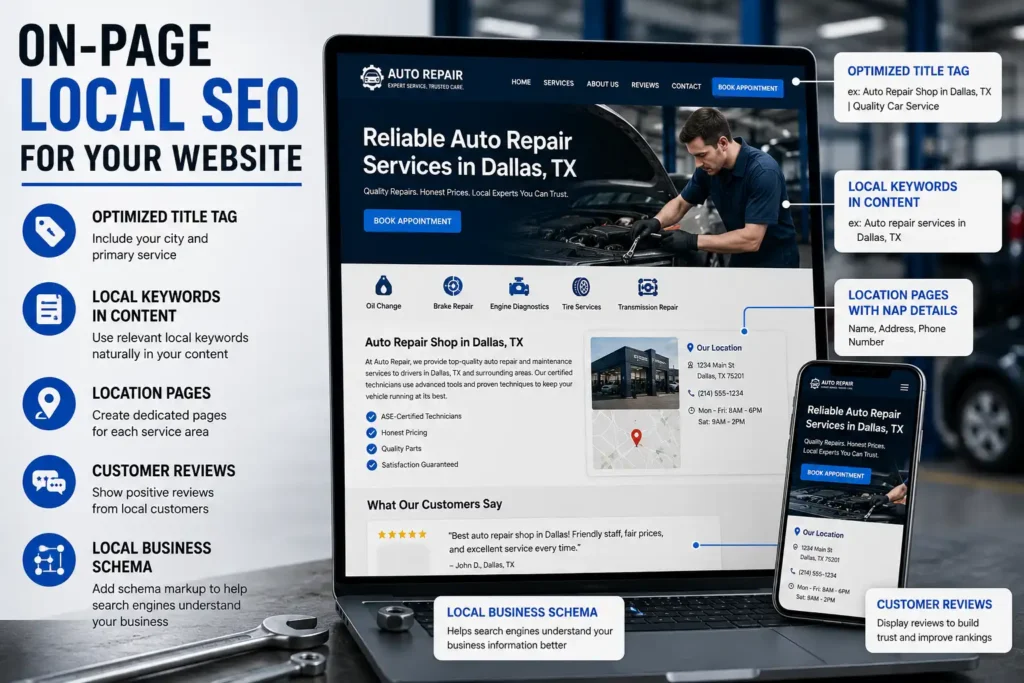
On-Page Local SEO for Your Website
Your website needs to tell Google exactly who you are, where you are, and what you do. This is called on-page local SEO. Done right, it significantly boosts your rankings for local searches.
Include Your City in Key Page Elements
Put your city name in your homepage title tag. Something like “Expert Auto Repair in [City Name] | [Your Shop Name]” is ideal. Also, include your city in your H1 heading. Add it naturally in the first paragraph of your homepage text.
Your footer should show your full address on every single page. This is called your NAP footer. It confirms your location to both Google and users.
Add Schema Markup for Local Business
Schema markup is code that tells search engines specific details about your business. Schema.org has a specific type for Auto Repair businesses. Adding this structured data helps Google display rich information about your shop in search results. It can show your hours, phone number, and star rating directly in the results.
If you use WordPress, plugins like Rank Math and Yoast SEO make adding schema markup easy. No coding required.
Create Individual Service Pages
Do not put all your services on one page. Each major service should have its own dedicated page. Create separate pages for oil changes, brake repair, transmission service, AC repair, engine diagnostics, and tyre services.
Each page should be at least 500 words. It should target a specific keyword like “Brake Repair in [City].” This approach gives Google much more content to index. It dramatically increases the number of relevant searches where your website appears.
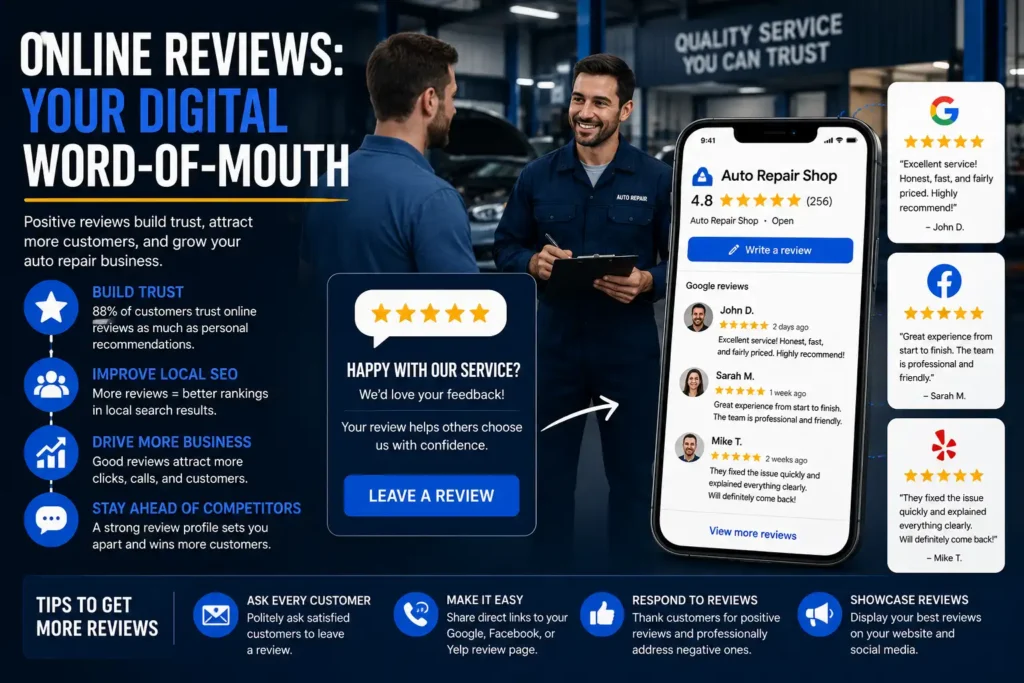
Online Reviews: Your Digital Word-of-Mouth
Reviews are the number one factor that influences whether someone chooses your shop over a competitor. A steady stream of recent, positive reviews is non-negotiable in 2026.
How to Get a Constant Flow of Reviews
Most shop owners know reviews matter. Very few have a system that consistently generates them. The difference between a 3.8-star shop and a 4.8-star shop is almost always a system, not a luck problem.
The best time to ask for a review is at the exact moment a customer is happiest. That moment is when they pick up their vehicle. The repair is done. The problem is solved. They feel relieved. That is when you ask.
Build an Automated Review Request System
Manual review requests are inconsistent. Some service advisors remember to ask. Others don’t. An automated system sends a review request every single time without fail. Here is how to set it up:
Step 1: Collect Customer Phone Numbers and Emails
Make sure you capture every customer’s mobile number and email address at check-in. You need this for the follow-up system to work. Most shop management software, like Shopmonkey or Tekmetric, does this automatically.
Step 2: Send a Text Message Within 2 Hours of Pickup
Research shows that review request messages sent within two hours of service completion get the highest response rates. Send a simple, friendly text that thanks them and includes a direct link to your Google review page.
Step 3 : Keep the Message Short and Personal
Something like: “Hi [Name], thanks for trusting [Shop Name] with your vehicle today. We would love to hear about your experience. It takes just 60 seconds: [direct review link]” This converts far better than a formal template.
Step 4: Send One Follow-Up Email If No Response
Three days after the service, send one follow-up email. Mention a specific detail about their car if possible. Personalisation dramatically improves response rates on follow-ups.
Your goal should be getting at least 10 new Google reviews per month. This keeps your profile fresh in Google’s eyes. It signals active business operations. And it continuously builds trust with new potential customers who see recent, real reviews. Shops I have worked with that hit this goal consistently rank in the top 3 map results within 90 days.
Never Offer Incentives for Reviews
Do not offer discounts, freebies, or any reward for leaving a review. Google’s review policies strictly prohibit this. Violating this policy can result in your Business Profile being suspended entirely. It is not worth the risk. Ask genuinely. People respond to that.
How to Respond to Reviews the Right Way
Responding to reviews is as important as getting them. Google considers your response rate and response speed as local ranking factors. Potential customers read your responses just as carefully as they read the reviews themselves.
Responding to Positive Reviews
Thank the customer by name. Mention the specific service they had done. Invite them back. This shows you actually read reviews and genuinely care. It also helps your SEO because your response text contains relevant keywords.
For example: “Thanks so much for the kind words, Sarah! We are glad the brake service went smoothly. Looking forward to seeing you for your next oil change! That response naturally includes keywords like “brake service” and “oil change”.
Responding to Negative Reviews
Never argue with a negative review. Never post defensively. A bad response to a negative review can damage your reputation more than the original review did.
Instead, acknowledge the issue. Apologies for the experience. Offer to make it right offline. Something like: “We are sorry to hear this did not meet your expectations. Please call us at [number] so we can make this right.” This response shows potential customers you are professional and responsive.
Warning: Never Do This
Do not offer a refund or compensation publicly in a review response. This signals to dishonest people that leaving negative reviews results in free money. Always move resolution conversations to a private channel. One or two resolved complaints handled professionally can actually increase trust with future customers who see how you handle problems.
Diversify Your Review Platforms
Google reviews are the most important. But do not neglect other platforms. Yelp reviews influence rankings on Apple Maps. RepairPal reviews specifically target automotive customers. Facebook reviews matter for social proof when running ads. Aim to build reviews on at least three platforms simultaneously.
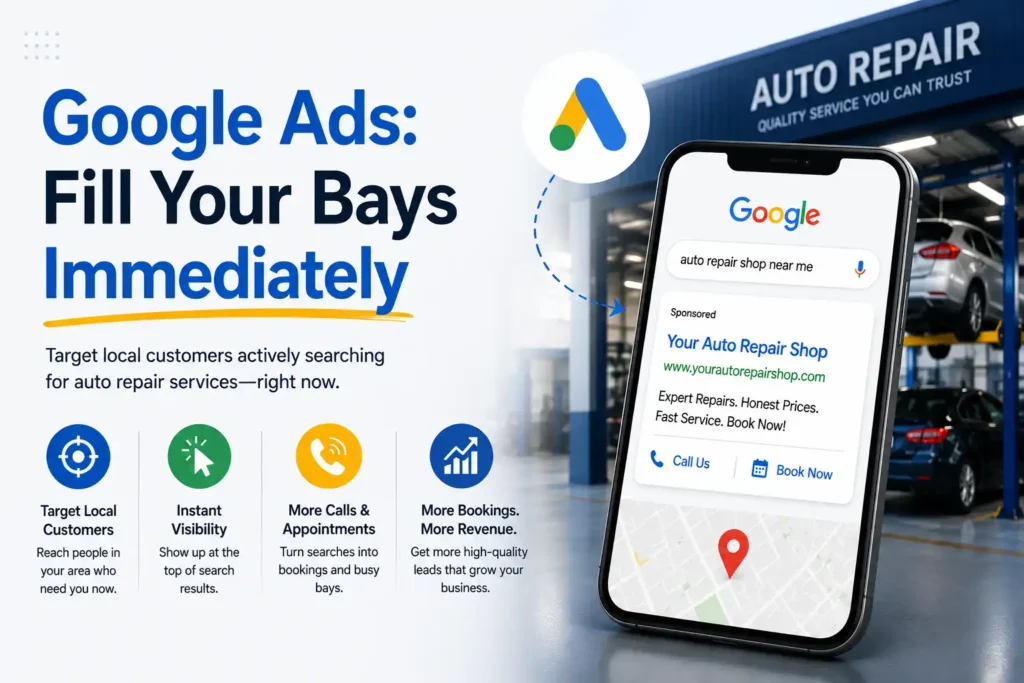
Google Ads: Fill Your Bays Immediately
Performance marketing through Google Ads is one of the fastest ways to generate quality leads for your auto repair shop. With the right setup and targeting, your business can start showing at the top of search results within days, helping you attract more local customers and increase bookings quickly.
Start with Google Local Service Ads
Google Local Service Ads (LSA) appear above regular paid search ads. They show your business name, star rating, and a call button. You only pay when a customer calls or messages directly through the ad. This is called pay-per-lead rather than pay-per-click.
For auto repair shops, LSA typically delivers a much lower cost per lead than standard Google Ads. I have seen shops get qualified calls for $15 to $30 each through LSA. The same calls from standard Google Ads often cost $50 to $80 each.
Getting the Google Guarantee Badge
To run LSA, you need to pass Google’s verification process. This involves a background check for your business and potentially your technicians. You also need to provide proof of insurance and a licence. Getting the Google Guarantee badge adds a green tick to your ad. This dramatically increases customer trust and conversion rates.
How to Maximise Your LSA Performance
Make sure your GBP has at least 25 reviews before running LSA
Respond to every lead within 5 minutes — Google tracks your response time
Mark leads as “booked” promptly inside the LSA dashboard
Dispute invalid leads immediately to avoid paying for them
Keep your availability calendar updated accurately
LSA Ranking Factors Google ranks your LSA based on review count, review score, response rate, and proximity. Shops with more reviews and faster response times appear first. This is why building your review system first is so important. A shop with 80 reviews will always outperform a shop with 20 reviews in the LSA results, regardless of budget.
Running Profitable Google Search Campaigns
Standard Google Search Ads give you more control over targeting and messaging. They work well for specific high-value services where the average repair ticket is large enough to justify the cost per click.
Target High-Value Service Keywords
Not all repairs are worth advertising equally. Focus your ad budget on services with high average repair values. Transmission repair, engine repair, timing belt replacement, and AC system service all have high ticket values. A $65 click that converts to a $1,200 repair is excellent ROI. A $40 click for an oil change that nets $45 is terrible ROI.
Target keywords that signal high intent. Phrases like “transmission repair near me,” “check engine light diagnosis [city],” and “AC not blowing cold [city]” indicate someone needs repair now. They are not just browsing.
Use Location Targeting Precisely
Do not target your entire state or region. Target a realistic radius around your shop. Most customers will not drive more than 10 to 15 miles for routine repairs. For major repairs, they might travel further. Set your radius accordingly and avoid paying for clicks from people who will never visit.
Build Dedicated Landing Pages
Sending ad traffic to your homepage is one of the biggest mistakes in auto repair advertising. Create a dedicated landing page for each ad campaign. A transmission repair ad should go to a transmission repair landing page. It should have your phone number prominently displayed, a simple contact form, and clear trust signals like reviews and certifications.
A well-designed landing page can double or triple your conversion rate from the same ad spend. That means twice as many leads for the same budget.
Set Up Conversion Tracking First
Before spending a single dollar on Google Ads, set up proper conversion tracking. Install Google Analytics 4 on your website. Track phone calls from ads using Google Ads call tracking. Track form submissions. Without this data, you are flying blind. You cannot improve what you cannot measure.
Negative Keywords Are Not Optional
Add an extensive negative keyword list before your campaigns go live. Negative keywords prevent your ads from showing for irrelevant searches. Exclude terms like “auto repair manual,” “auto repair training,” “free auto repair,” “auto repair jobs,” and “DIY car repair.” Failing to do this wastes 20 to 40% of your budget on people who will never call your shop.
Budget Recommendation
For most independent auto repair shops, a starting budget of $800 to $1,500 per month for Google Ads is realistic. This is enough to run meaningful campaigns without overextending. Once you have conversion data showing profitability, scale up. I have worked with shops spending $5,000 per month on Google Ads profitably. But they started at $1,000 and proved the model first.
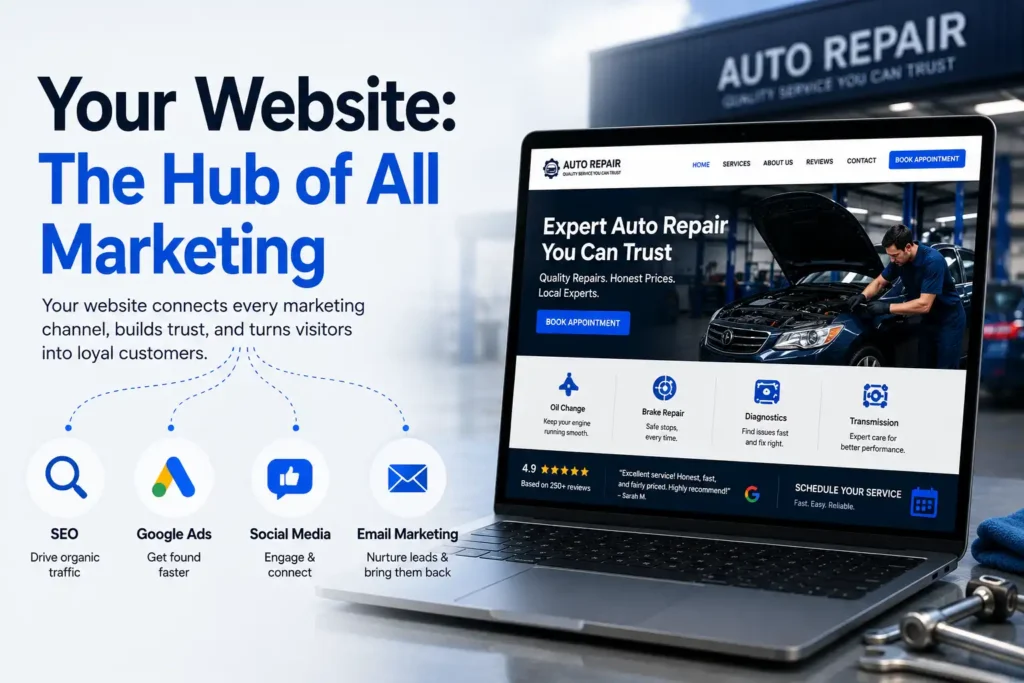
Your Website: The Hub of All Marketing
Every marketing channel leads potential customers to your website, which is why responsive website designis so important. If your site is slow, hard to navigate, or looks unprofessional on mobile devices, people will leave before booking. A fast, user-friendly website helps turn visitors into real customers.
Website Design and Speed Fundamentals
The auto repair customer looking for help right now has no patience for a slow or confusing website. They will bounce within seconds and call the next shop on the list. Your website has one job. Make it effortless for someone to trust you and contact you.
Speed is a Make-or-Break Factor
Check your website’s speed right now using Google PageSpeed Insights. If your mobile score is below 70, you are losing customers and rankings simultaneously. Page speed is a confirmed Google Core Web Vitals ranking factor.
The most common speed killers for auto repair websites are unoptimized images, too many plugins, and cheap shared hosting. Compress all images before uploading them. Use a fast hosting provider. Consider a CDN (Content Delivery Network) to serve your site faster to local visitors.
Mobile-First Design Is Non-Negotiable
Over 70% of auto repair searches happen on mobile devices. Someone’s car breaks down. They pull out their phone. They search for a nearby shop. If your website is hard to navigate on a phone, they are gone.
Make your phone number a clickable tap-to-call button. Put it at the very top of every page. Do not make mobile visitors scroll to find how to contact you. That single change has increased calls by 25% or more for shops I have worked with.
What Your Homepage Must Include
Your phone number in large, clickable format at the top
Your city and neighbourhood are mentioned in the first heading
A clear list of your most common services
Your Google star rating with a link to your reviews
Photos of your shop, team, and equipment
ASE certifications or other trust badges
Your hours and address are in the footer of every page
An SSL Certificate Is Essential. Make sure your website uses HTTPS, not HTTP. An SSL certificate is required by Google for good rankings. It also shows the padlock icon in browsers. Without it, some browsers warn users that your site is “not secure.” That warning destroys conversion rates.
Service-Specific Landing Pages That Convert
Each of your major services should have its own dedicated webpage. Not just a line on a services list page. A proper, comprehensive page targeting a specific service and location.
A good service page for “Brake Repair in Houston” should include what brake repair involves, how long it takes, what it costs (at least a range), why choosing a certified shop matters, your specific brake repair process, customer testimonials mentioning brake work, and a clear call to action with your phone number.
The Services That Deserve Their Own Pages
Oil change and fluid services
Brake inspection and repair
Transmission service and repair
Engine diagnostics and repair
AC service and repair
Tyre services and rotation
Battery testing and replacement
Suspension and alignment
Pre-purchase vehicle inspections
Electrical system diagnostics
Each page should be at least 600 to 800 words. Use your target keyword naturally throughout. Include your city name in the page title, H1, and body text. Add a FAQ section answering common questions about that specific service. FAQs help your page rank for question-based searches.
Online Booking Is No Longer Optional
A significant percentage of modern car owners prefer booking appointments online. They do not want to call during business hours. They want to book at 9 PM after putting the kids to bed. If you do not offer online booking, you are losing those customers to shops that do.
Online booking tools also reduce the workload on your service advisors. Every appointment booked online is one fewer phone call they need to handle. That frees them to focus on customers already in the shop.
What to Look for in a Booking Tool
It integrates with your existing shop management software
It allows customers to select specific services
It sends automatic confirmation texts and emails
It sends reminder messages before the appointment
It appears on your Google Business Profile as a booking option
Tools like Shopmonkey and Tekmetric all offer online booking features designed specifically for auto repair shops.
Real Impact of Online Booking:
One of my clients added online booking to their site on a Thursday evening. By the following Monday, they had three new appointments booked outside of business hours. All three customers specifically mentioned they booked because the process was easy. One of those customers became their highest-spending regular in the following year.
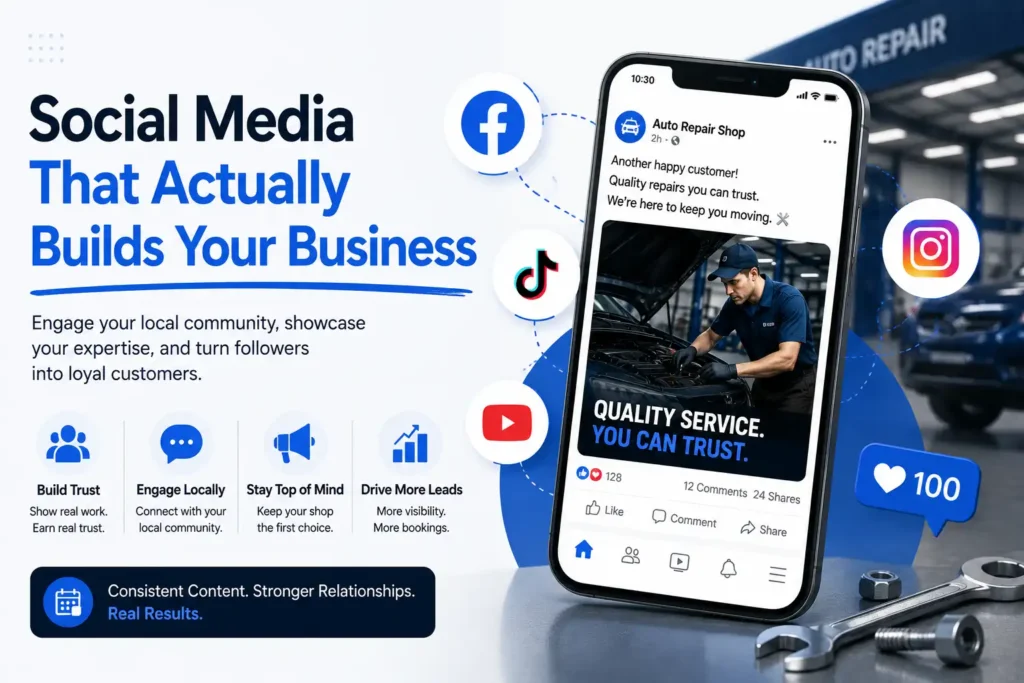
Social Media That Actually Builds Your Business
Social media marketing for auto repair shops is not about going viral or chasing trends. It’s about staying active, building trust, and keeping your shop visible in the local community.
Facebook: Your Community Hub
Facebook remains the most powerful social platform for local service businesses. Its age demographics lean slightly older, which aligns perfectly with the typical auto repair customer. Facebook also has the most powerful local targeting available for paid advertising.
What to Post on Your Facebook Page
Before and after photos of interesting repairs
Short videos explaining common car problems in plain language
Seasonal maintenance tips with your shop branding
Team spotlights, introducing your mechanics
Customer testimonials with the customer’s permission
Special offers and promotions with clear expiry dates
Community involvement posts, like sponsoring local sports teams
Facebook Ads for Auto Repair Shops
Facebook Ads are especially powerful for re-engaging past customers and reaching new people nearby who have never heard of your shop. The targeting capabilities are remarkable. You can target people within five miles of your shop. You can target people who recently bought a vehicle. You can target by age, income range, and interests.
The most effective Facebook ad format for auto repair shops is the “seasonal reminder” ad. Run an ad in October saying “Is your car winter-ready?” with a simple coupon for a free inspection. Target people within 10 miles. A $200 Facebook Ad campaign like this typically generates $1,500 to $3,000 in repair revenue in my experience.
Retargeting Website Visitors
Install theFacebook Pixel on your website. This allows you to run ads specifically targeting people who have already visited your website. These are warm prospects who already know your shop exists. Retargeting ads typically convert at three to five times the rate of cold audience ads.
Instagram and Video Content That Gets Attention
Instagram and short-form video are increasingly powerful for auto repair shops. The audience tends to be younger, but that matters. You want to capture future loyal customers before your competitors do.
The Types of Content That Work for Auto Shops
Before and after photos perform exceptionally well. A heavily dented car next to the same car after panel beating and repainting is visually striking. These posts get high engagement and shares.
Short explanation videos build trust fast. Film a 60-second video of a mechanic explaining why brake fluid needs to be changed. Show the old fluid next to the new fluid. These educational videos position your shop as the experts and are immensely shareable.
Satisfying process videos are great for Instagram Reels. A time-lapse of a full engine removal and reinstall. Close-up shots of a brake job being done precisely. These appeal to the large online community of car enthusiasts and get far more reach than ordinary posts.
YouTube Shorts and TikTok for Younger Customers
Do not dismiss YouTube Shorts or TikTok for your shop. Shops that consistently post short, educational car care content build enormous local followings. The algorithm pushes this content to people in your geographic area.
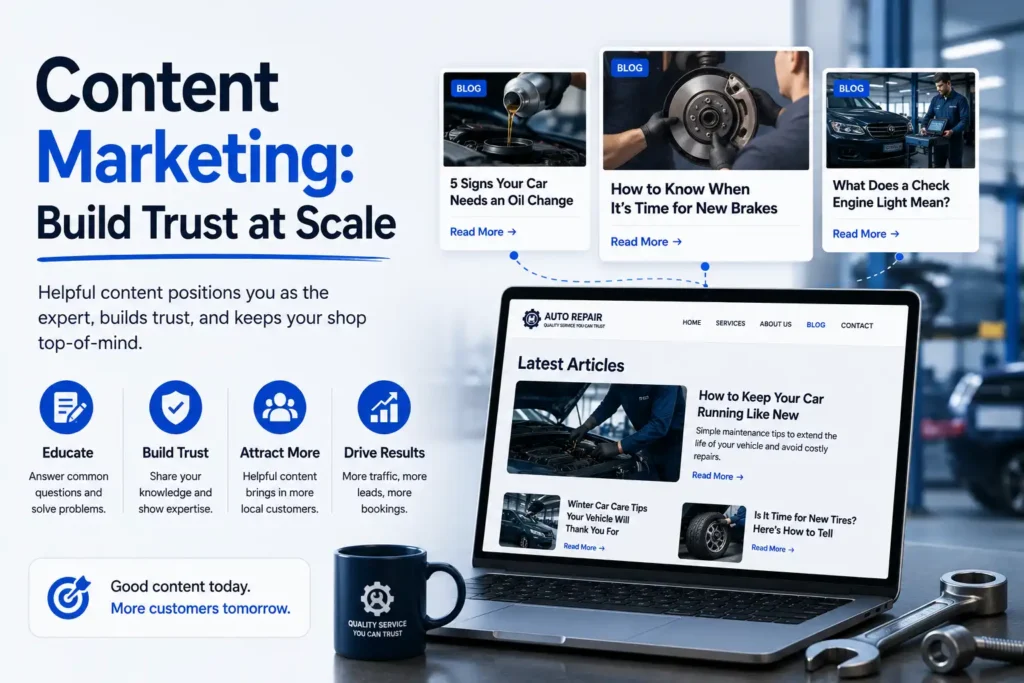
Content Marketing: Build Trust at Scale
Content marketingearns you trust before a customer ever sets foot in your shop. The right content answers the questions your customers are already asking Google.
Blogging for Local SEO and Lead Generation
A blog might sound old-fashioned. But it is one of the most powerful SEO tools an auto repair shop can use. Every blog post is a new page that Google can rank. Every page that ranks is another way customers find your shop.
The Types of Blog Posts That Generate Leads
Problem-based posts capture customers in crisis. Titles like “What to Do When Your Check Engine Light Comes On in [City]” or “Why Is My Car Making a Grinding Noise When I Brake?” answer the exact question someone just typed into Google. These visitors are in the market for a repair right now.
Comparison posts help customers make decisions. “OEM vs Aftermarket Parts: What’s Better for Your Car?” or “Is It Worth Fixing a High-Mileage Car?” These posts build trust because you are providing genuinely useful information without a hard sell.
Seasonal maintenance posts are evergreen and highly searchable. “How to Prepare Your Car for Winter in [City]” gets searched every November. “Signs Your Car AC System Needs Service” gets searched every June. Write these posts once, and they generate leads every single season for years.
How Often Should You Post?
Aim for at least 4 to 6 posts per month. Consistency matters more than volume. A shop that publishes two solid 800-word posts per month will outperform one that posts 10 thin articles and then goes quiet for three months. Quality and consistency are everything in blog content.
Content Idea Generator: Go to AnswerThePublic.com and type in terms like “car repair,” “brake repair,” or “check engine light.” It will show you hundreds of actual questions people are searching for. Every question is a potential blog post. This free tool can give you a year’s worth of content ideas in 15 minutes.
YouTube as a Lead Generation Engine
YouTube is the second-largest search engine in the world. It is owned by Google. Videos that rank well on YouTube often also appear in Google search results. This makes YouTube an incredibly powerful SEO tool for local businesses.
You do not need high-quality production equipment. A modern smartphone in decent lighting is enough to create content that works. The quality of the information matters far more than production value for educational auto repair content.
Video Ideas That Drive Local Leads
“What does [warning light] mean and what should you do?”
“How do we diagnose a [common problem] at [Shop Name]?”
“A tour of our shop in [City Name]”
“What to expect during a full brake inspection”
“How long does a transmission service take?”
“5 things to check before buying a used car in [City]”
Optimise Your Videos for Local Search
Include your city name in every video title. Use keywords your customers search for. Add your shop’s full address and phone number in every video description. Link to your website in the first line of each description. Add location tags to every video. These steps help your videos appear when local customers search for auto repair help.
Customer Retention: Your Most Profitable Marketing
Getting a new customer costs five to seven times more than keeping an existing one. Your retention marketing is where your real profit lives. Most shops dramatically underinvest in this area.
Email and SMS Marketing That Brings Customers Back
Every customer who has ever visited your shop is a warm lead. They already know you. They already trust you to some degree. Getting them back for their next service should be far easier than finding a brand new customer.
Yet most auto repair shops have zero system for following up with past customers. They rely entirely on customers remembering to call when their car needs work. That is leaving enormous revenue on the table.
Service Reminder Emails Work Remarkably Well
Set up automated service reminder emails based on time since last visit or mileage. Someone who got an oil change at your shop six months ago probably needs another one. An automated email saying “Hey [Name], it has been about six months since your last oil change. Ready to book?” is simple and extremely effective.
SMS Beats Email for Urgency
Text message open rates average around 98%. Email open rates average around 21%. For time-sensitive service reminders, SMS almost always outperforms email. Twilio and Podium both offer affordable SMS marketing tools that integrate with most shop management systems.
What to Send and When
Oil change reminder at 5,500 miles or five months after last service
Tyre rotation reminder at six months after the last rotation
Annual vehicle inspection reminder each year in the same month
Seasonal promotions two weeks before the season starts
Birthday discount for your most loyal customers
Declined service follow-up after 30 and 60 days
Declined Services: Hidden Revenue. Every service your technicians recommended but the customer declined is a warm sales lead sitting in your database. Have your service advisors call customers one month after a declined service. A simple call saying “Hi, we recommended replacing your brake pads last month. How are they holding up?” converts surprisingly often. Many customers simply needed more time to make the decision.
Simple Loyalty Programs That Actually Work
A loyalty programme does not need to be complicated. The goal is simply to make your regular customers feel valued and to give them a reason to keep choosing your shop over the one down the street.
The Punch Card Model
The simplest loyalty programme for an auto shop is also one of the most effective. Offer a free oil change after every five paid oil changes. This is easy to understand, easy to manage, and genuinely drives repeat visits.
You can do this digitally using a simple app like Stampr or even just track it in your shop management system. The physical punch card also works fine. Some customers love having something tangible to carry in their glove box.
VIP Customer Club
For your top 20% of customers by revenue, consider a VIP programme. VIP members might get priority scheduling, a free annual inspection, and 10% off parts. The cost to you is minimal. The loyalty it creates is substantial. These are your advocates who refer friends and family to your shop.
The 80-20 Rule in Auto Repair. In most shops, around 20% of customers generate 80% of revenue. Know who those customers are. Treat them exceptionally well. A handwritten thank-you card from the owner after a major repair costs almost nothing. It creates a memory that the customer will tell their friends about. Word-of-mouth referrals from your VIP customers are often your highest-quality and lowest-cost new customer source.
Referral Programmes That Generate Consistent Leads
Your happy customers are your best salespeople. They already trust you. They have already recommended you to friends informally. A formal referral programme makes that process systematic and rewards both parties.
The simplest referral programme: give your existing customer a $25 credit for each new customer they refer. The new customer gets $25 off their first service. You pay $25 to acquire a new customer who could spend $1,000 per year with you for the next decade. That is an outstanding return on investment.
How to Promote Your Referral Programme
Mention it verbally when customers pick up their vehicles
Include it in your email follow-up sequence
Post about it on social media once per month
Add a card to the take-home bag with each service
Put a small sign at your front counter
Include it in your customer loyalty welcome message
The key to a referral programme is making it easy to share. Provide customers with a unique referral code or a simple share link they can text to friends. Friction kills referral programmes. The easier it is to refer, the more referrals you will get.
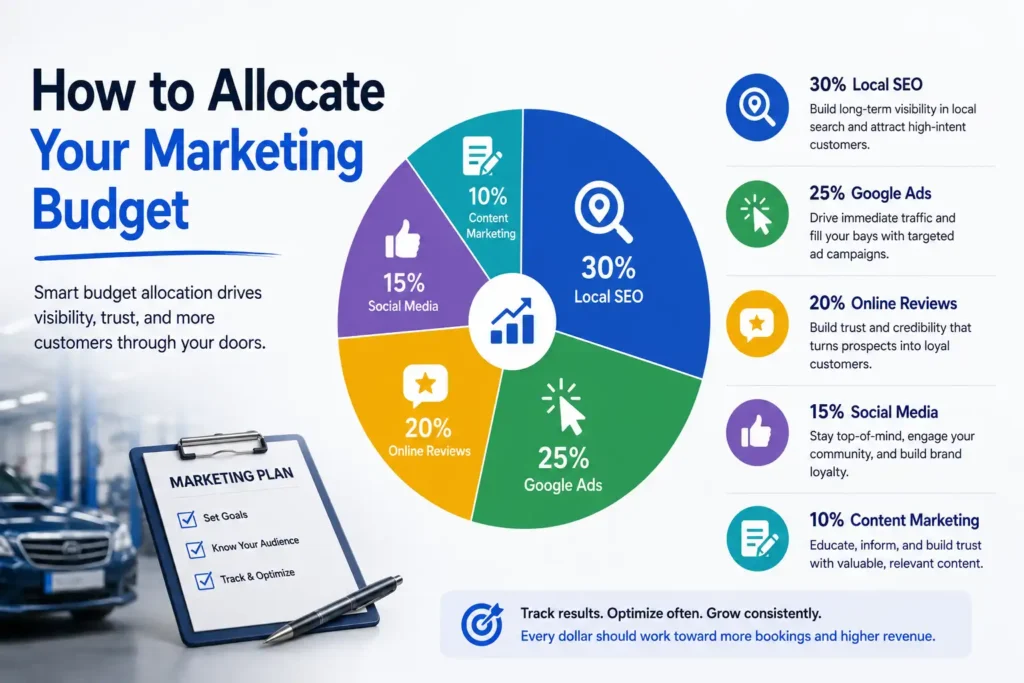
How to Allocate Your Marketing Budget
Marketing budget allocation depends entirely on your shop’s current situation. Here is a practical framework based on 15 years of working with independent auto repair shops.
Budget Frameworks for Different Shop Stages
I am going to be direct. Many shops waste marketing budget on the wrong channels at the wrong stage of their business. Here is what actually makes sense at each stage.
New Shop (Open Less Than 12 Months)
Your priority is generating leads fast while building long-term assets. Allocate your budget roughly like this: 40% on Google Ads and LSA for immediate leads, 30% on local SEO and website optimisation, 20% on social media content creation, and 10% on print and local community presence.
Your minimum viable marketing budget as a new shop is around $1,500 per month. Below this level, results will be frustratingly slow. If the budget is very tight, prioritise your Google Business Profile and review generation first. Both are free and provide the highest return per hour spent.
Growing Shop (1 to 3 Years Old)
By now, you have some data. You know which services are most profitable. You know where most of your customers come from. Shift your budget toward what is already working. Increase SEO investment as it begins to compound. Maintain Google Ads for your most profitable high-ticket services. Begin email and SMS marketing for customer retention.
Established Shop (3 Plus Years)
If your SEO is working well, organic leads should be your primary channel. Use paid ads selectively for seasonal promotions and high-value services where the cost per click is justified. Invest heavily in customer retention marketing. Returning customers are your most profitable segment.
The Rule of Thumb: Most marketing consultants recommend spending 5 to 10% of gross revenue on marketing for a growing business. A shop doing $600,000 per year in revenue should be spending $30,000 to $60,000 annually on marketing. That breaks down to $2,500 to $5,000 per month. If your shop is spending significantly less than this, you are likely under-investing in growth.
Walk into two different auto repair shops in the same city, and you might notice something interesting. One shop is always busy. Cars are lined up. Phones keep ringing. The schedule is full days in advance. The other shop? Quiet. A few cars are in the lot. Technicians waiting for work.
Both may offer similar services. Both may have skilled mechanics. So why does one grow faster than the other? The difference usually comes down to how the business is run, not just the repairs it offers.
Let’s break down what separates high-growth shops from the rest.
Growth Starts With Mindset
In the Auto Repair Industry, many shop owners focus only on daily operations. Fix the car. Move to the next one. But high-growth shops think differently.
They treat their shop like a business, not just a workplace. They look at:
Long-term growth
Customer relationships
Consistent improvement
Marketing Strategies That Actually Work
This shift in thinking lays the foundation for real progress.
They Focus on Customer Retention, Not Just New Customers
A common mistake is chasing only new customers. But the shops that grow faster understand the value of Customer Retention. Getting a new customer costs time and effort. Keeping one is much easier. When customers return regularly, it increases:
Customer Lifetime Value
Predictable income
Overall stability
This is why successful shops build systems to bring customers back, not just bring them in.
They Deliver a Better Customer Experience
Fixing cars is expected. A great experience is what people remember.
Top-performing shops pay attention to:
Clear communication
Honest recommendations
Timely updates
All of this improves the Customer Experience.
When customers feel respected and informed, they are far more likely to return—and recommend the shop to others.
They Stay Consistent With Follow-Ups
Many shops lose customers simply because they don’t stay in touch.
High-growth shops use Follow-Up Communication to stay connected.
This includes:
Service reminders
Check-ins after repairs
Reconnecting with inactive customers
These small actions help:
Increase repeat customers for auto repair
Reduce missed opportunities
Keep the schedule full
Consistency matters more than complexity.
They Use Data to Make Better Decisions
Growing shops don’t guess they measure.
They track:
Number of returning customers
Average repair value
Missed appointments
This helps improve Lead Conversion and overall performance.
Even simple tracking can reveal where revenue is being lost and where it can grow.
They Build Efficient Systems
As a shop grows, things can get messy without structure.
That’s why successful shops rely on systems like:
Shop Management Software
Customer Relationship Management
Marketing Automation
These tools are not about technology for its own sake. They help:
Reduce manual work
Improve consistency
Save time
Efficiency directly impacts Revenue Growth.
They Maximize Every Customer Visit
Fast-growing shops don’t just complete the requested job. They look at the bigger picture.
For example:
Suggesting upcoming maintenance
Identifying small issues early
Offering complete solutions
This isn’t about pushing sales. It’s about helping customers avoid bigger problems later.
It naturally supports:
Upselling
Higher ticket value
Better customer trust
Case Study: Wise Car Care
Wise Car Care is an independent auto repair shop located in a busy area of Houston, TX. Unlike large chains or franchise operations, they relied entirely on their own local presence to grow.
Despite being in a high-traffic location, the shop faced several challenges:
No structured system for attracting new customers
Low visibility on platforms like Google Search, Safari, and Bing
Heavy dependence on walk-ins and inconsistent demand
This made growth unpredictable. Even with good service, they weren’t reaching enough new customers.
Things began to change when 4P Wisdom helped introduce a more structured and consistent approach to growth. The focus shifted toward improving visibility, creating steady customer flow, and building repeat business. Discover our auto repair shop marketing solutions.
The results were clear:
Revenue increased by 5X over time
The shop started getting 50 to 60 new customers every month
Repeat visits also increased, strengthening long-term stability
Today, Wise Car Care operates with a much more predictable and steady flow of business. This case shows that even independent shops, not just big chains, can achieve strong growth with the right systems in place.
Case Study: Meineke Car Care Center
Meineke Car Care Center is a well-known franchise and one of the largest auto repair chains across the United States. With multiple locations operating under the same brand, they already had strong recognition. But scale brought its own challenges.
The Challenges
Inconsistent customer experience across different locations
Difficulty maintaining a steady customer flow at every shop
Limited visibility into what was driving repeat visits
Missed opportunities due to a lack of consistent follow-up
Variation in performance between high-performing and low-performing locations
The Approach
Standardizing customer communication across locations
Improving Customer Experience at every touchpoint
Implementing structured Follow-Up Communication
Using centralized systems to track performance and customer behavior
Creating repeatable processes that each location could follow
The Results
38 booked repairs per month
6X growth in overall performance
They Adapt to Changing Customer Behavior
Customer expectations have changed.
People now expect:
Quick responses
Clear information
Convenience
Shops that grow faster understand this. They adapt their processes to match these expectations.
Those who don’t often struggle with:
Lost customers, auto shop problems
low repeat business mechanic shop issues
Declining engagement
Adapting is no longer optional; it’s necessary.
Small Gaps That Slow Growth
No follow-up system
Poor communication
Lack of tracking
These issues may seem small, but they create bigger problems over time:
Customer drop-off after service
Missed revenue opportunities
Inconsistent growth
Growth Is Built on Consistency
There’s no single secret that makes one shop grow faster than another.
It’s usually a combination of:
Better systems
Stronger customer relationships
Consistent communication
Shops that focus on these areas build momentum over time.
And once that momentum builds, growth becomes easier to sustain.
Final Thoughts
In the end, growth in the auto repair business isn’t random.
Shops that grow faster:
Stay connected with customers
Focus on long-term value
Improve their processes consistently
While others rely only on daily work and hope for the best.
If there’s one takeaway, it’s this:
Small, consistent improvements lead to big results.
Because in this industry, success doesn’t come from doing everything at once. It comes from doing the right things again and again.